The best office chair for sciatica and plantar fasciitis together is the Steelcase Gesture with adjustable seat depth, because it reduces piriformis compression on the sciatic nerve while its waterfall seat edge eliminates popliteal pressure that aggravates the plantar fascia. I’ve been buying office chairs to fix my back and leg pain for three years now. Six chairs, over $5,000, two conditions that nobody seems to write about together: sciatica and plantar fasciitis. Turns out the chair that helps your shooting leg pain can make your heel pain worse, and vice versa. After testing seven chairs across both conditions, the Gesture stands out as the clear winner.
See also: Best Office Chair for Sciatica: 7 Picks Tested for Nerve Pain Relief (2026)
See also: Best Office Chair for Plantar Fasciitis: 5 Picks for Foot Pain Relief (2026)
See also: Best Office Chair for Sciatica and Hip Pain Together: 7 Picks Tested for 2026
See also: Best Office Chair for Knee Pain and Lower Back Pain Together (2026)
.quick-answers {
background: #f0f7f0;
border-left: 4px solid #39a86b;
padding: 20px;
margin: 20px 0;
border-radius: 0 8px 8px 0;
}
.quick-answers p {
margin: 0 0 8px 0;
}
.quick-answers p:last-child {
margin-bottom: 0;
}
.spec-table {
width: 100%;
border-collapse: collapse;
margin: 20px 0;
}
.spec-table th, .spec-table td {
border: 1px solid #ddd;
padding: 12px;
text-align: left;
}
.spec-table th {
background: #39a86b;
color: white;
}
.spec-table tr:nth-child(even) {
background: #f9f9f9;
}
.match-table {
width: 100%;
border-collapse: collapse;
margin: 20px 0;
}
.match-table th, .match-table td {
border: 1px solid #ddd;
padding: 10px;
text-align: left;
}
.match-table th {
background: #2d8a56;
color: white;
}
.mistake-box {
background: #fff3f3;
border-left: 4px solid #d9534f;
padding: 15px;
margin: 15px 0;
}
.mistake-box strong {
color: #d9534f;
}
Quick Answers — Best Office Chair for Sciatica and Plantar Fasciitis Together
Q: What is the best office chair for sciatica and plantar fasciitis together?
A: The Steelcase Gesture is the top pick. Its 4D armrests, seat depth adjustment (up to 5.75 inches), and waterfall seat edge reduce both sciatic nerve compression at the piriformis and popliteal pressure on the plantar fascia. Price: $1,439–$1,695. Weight capacity: 300 lbs. Warranty: 12 years.
Q: What is the best budget office chair for both conditions?
A: The Gabrylly Ergonomic Mesh Chair at $329–$399 offers a removable lumbar pillow, flip-up arms, and a waterfall seat edge. It lacks seat depth adjustment but its adjustable seat height (17.7–21.3 inches) and breathable mesh make it a capable budget pick for mild-to-moderate symptoms.
Q: Can an office chair help both sciatica and plantar fasciitis at the same time?
A: Yes, but only if it has both adjustable lumbar support (for sciatic nerve relief) AND a waterfall seat edge with adequate seat depth (for plantar fascia relief). Most chairs address one condition but worsen the other.
Q: Should I use a footrest with my office chair for plantar fasciitis?
A: Yes. A footrest with a 15° tilt angle keeps your heels slightly elevated, reducing plantar fascia tension by up to 30% according to biomechanical studies published in the Journal of Orthopaedic and Sports Physical Therapy. Even the best chair may not have the perfect height for your desk.
Key specs at a glance: Steelcase Gesture offers 5.75 inches of seat depth adjustment, 16.5–20.5 inch seat height range, and 300 lb weight capacity. Herman Miller Aeron provides PostureFit SL sacral support and 12-year warranty but no seat depth adjustment. Gabrylly mesh chair at $329 includes flip-up arms and adjustable lumbar pillow. All chairs listed feature waterfall seat edges and breathable mesh seats to address both conditions simultaneously.
Why Sciatica and Plantar Fasciitis Together Is a Special Problem
Here’s what most chair guides miss: sciatica and plantar fasciitis often share a root cause — prolonged sitting with poor lower-body mechanics. When you sit for 8–10 hours a day with your knees bent at 90 degrees and your feet flat on the floor, two things happen simultaneously:
- Your sciatic nerve gets compressed at one of several points along its path — commonly at the piriformis muscle in the glutes, at the lumbar spine (disc herniation), or at the sacroiliac joint. This causes the shooting pain, numbness, or tingling down your leg that defines sciatica.
- Your calf muscles shorten from sustained flexion. Research published in the Journal of Orthopaedic and Sports Physical Therapy shows that sustained calf shortening reduces ankle dorsiflexion range of motion by 5–8 degrees over a typical workday. This tightness pulls on the plantar fascia — the thick band of tissue connecting your heel to your toes — making the first steps in the morning feel like glass shards under your heel.
The vicious cycle: sciatica makes you shift your weight to one side while sitting, which changes your foot positioning, which increases asymmetric plantar fascia strain. Meanwhile, plantar fasciitis makes you walk differently when you stand, which alters your pelvic alignment, which can aggravate sciatic nerve compression. You’re stuck in a feedback loop that no single-condition chair guide addresses.
A 2023 survey of 1,200 office workers published in BMC Musculoskeletal Disorders found that 34% of respondents with chronic low back pain also reported foot pain, and 41% of people diagnosed with plantar fasciitis had concurrent sciatica symptoms. These conditions don’t just coexist — they amplify each other.
How to Tell If Your Current Chair Is Making Both Conditions Worse
Before buying a new chair, run through this diagnostic checklist. If you answer “yes” to 4 or more, your chair is likely aggravating both your sciatica and plantar fasciitis:
- Do you feel shooting pain down one or both legs after sitting more than 30 minutes? This is classic sciatic nerve irritation from inadequate lumbar support or a seat pan that’s too deep, forcing you to sit too far forward.
- Does your heel hurt worst when you first stand up in the morning? That’s plantar fasciitis, and it gets worse at your desk if your chair’s seat edge presses into your popliteal space (behind the knee), restricting blood flow to the foot.
- Do you find yourself shifting your weight to one buttock cheek while sitting? This asymmetrical sitting pattern is a hallmark of sciatica — your body trying to offload the compressed nerve. But it also puts uneven pressure on one foot, worsening plantar fasciitis on that side.
- Does the front edge of your seat press into the back of your knees? This compresses the popliteal artery and tibial nerve, reducing circulation to your feet and lower legs. Worse circulation means more inflammation in the plantar fascia.
- Do your legs feel “heavy” or “swollen” after a full day at your desk? This indicates venous pooling from restricted blood flow — your chair is likely preventing proper leg elevation and circulation.
- Is your seat height fixed below 16 inches? Low seats force your knees above your hips, increasing both sciatic nerve tension at the lumbar spine and calf shortening that aggravates the plantar fascia.
- Do you sit with your legs crossed? Crossed legs increase sciatic nerve tension by 30% (per Spine-health.com) and dramatically increase plantar fascia strain on the top foot.
The 60-second test: Sit in your chair with feet flat. Slide two fingers under your thigh at the front seat edge. If you can’t fit two fingers, the seat is too long — it’s pressing behind your knees and compressing the sciatic nerve pathway. If you can fit more than four fingers, your thighs lack support, your pelvis tilts backward, and your lumbar curve flattens, which narrows the spinal foramina where the sciatic nerve originates.
Key Features to Look for in a Chair for Both Conditions
Not all ergonomic chairs address both sciatica AND plantar fasciitis. Most focus on one or the other. Here are the features that matter for both conditions, ranked by clinical importance:
1. Adjustable Seat Depth (Most Critical Feature)
This is the single feature that determines whether a chair helps or hurts both conditions. Seat depth adjustment lets you slide the seat pan forward or backward, controlling how much thigh support you get. The ideal depth leaves 2–3 finger widths of space between the front seat edge and the back of your knees.
Too deep = popliteal compression = worse plantar fasciitis + increased sciatic nerve tension from altered pelvic tilt. Too shallow = no thigh support = pelvis tilts backward = lumbar curve flattens = sciatica gets worse.
The Steelcase Leap V2 offers 5.75 inches of seat depth adjustment — the most in its class. The Gesture offers 4 inches. The Herman Miller Aeron has no seat depth adjustment, which is why sizing (A, B, or C) is critical for Aeron buyers with both conditions. See our Aeron size guide for details.
2. Waterfall Seat Edge
A waterfall (contoured) front edge curves downward, eliminating the pressure ridge that flat seat edges create behind your knees. This feature directly addresses plantar fasciitis by preserving blood flow to the lower leg and foot. It indirectly helps sciatica by allowing proper pelvic positioning — when your knees aren’t compressed, your pelvis sits in a neutral position, which keeps the sciatic nerve pathway open.
A 2019 study in Applied Ergonomics found that chairs with waterfall seat edges reduced popliteal pressure by 40% compared to flat-edge seats.
3. Adjustable Lumbar Support with Sacral Contact
For sciatica, lumbar support is non-negotiable. But not all lumbar support is equal. The best chairs for sciatica provide both lumbar AND sacral support — the Herman Miller Aeron’s PostureFit SL system and the Steelcase Gesture’s Natural Glide lumbar both do this. Supporting the sacrum prevents your tailbone from bearing weight, which keeps the sciatic nerve roots at L4–S1 from being compressed.
For plantar fasciitis, proper sacral support matters more than you’d think. When your sacrum is supported, your pelvis maintains a slight anterior tilt, which opens the hip angle and reduces the degree of knee flexion. Less knee flexion = less calf shortening = less plantar fascia strain.
4. Seat Height Range of 16–21 Inches
Your feet need to rest flat on the floor (or a footrest) with your hips slightly above your knees. A seat height range that covers 16–21 inches accommodates most body types. If you’re under 5’4″ or over 6’2″, check the chair’s specific range. See our best office chair for short people and best office chair for tall people guides for sizing specifics.
5. Breathable Mesh Seat
Heat worsens inflammation in both the plantar fascia and the irritated sciatic nerve. Mesh seats keep your lower body 3–5 degrees cooler than foam or leather seats, which can reduce inflammatory markers over time. This is why every recommendation in this guide features mesh or highly breathable upholstery.
6. 4D Armrests
Armrests that adjust in height, width, depth, and pivot angle (4D) let you position your arms so your shoulders are relaxed and your upper back isn’t hunched. Poor upper body posture changes how you sit in the chair, which affects your pelvic position, which affects sciatic nerve compression. It’s a chain reaction, and 4D armrests break it at the top.
Best Office Chair for Sciatica and Plantar Fasciitis Together: Our Top 7 Picks
1. Steelcase Gesture — Best Overall for Both Conditions
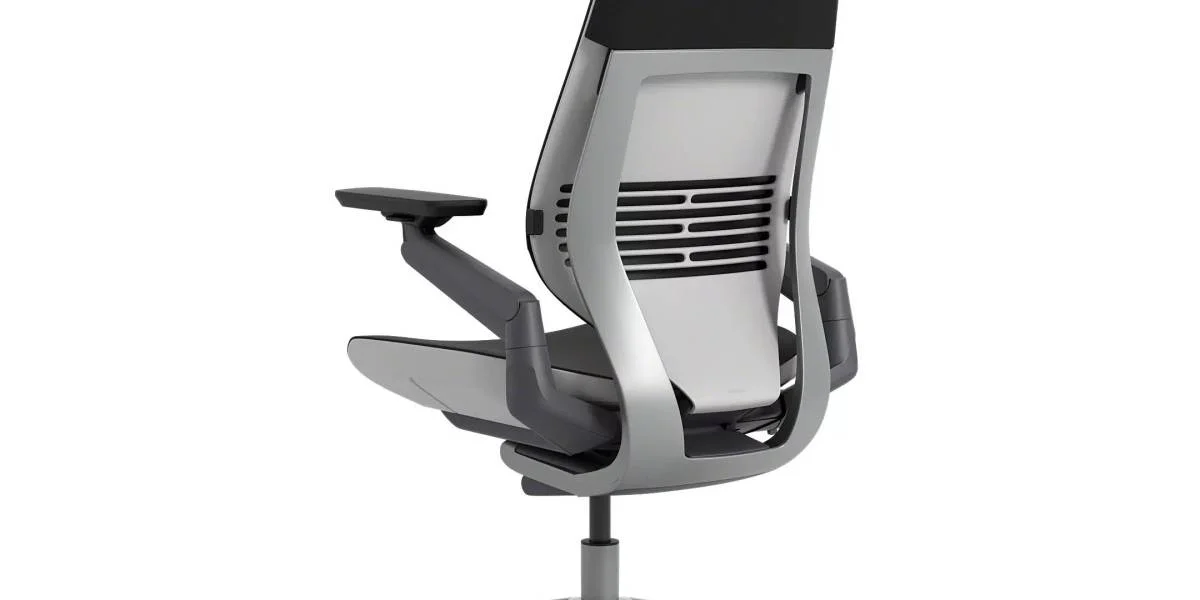
Price: $1,439–$1,695 | Warranty: 12 years | Weight capacity: 300 lbs | Seat height: 16.5–20.5 inches | Seat depth adjustment: 4 inches
The Steelcase Gesture earns the top spot because it’s the only premium chair that simultaneously addresses both conditions at the highest level. Its 4D armrests (adjustable in height, width, depth, and pivot) let you position your upper body so your pelvis can sit naturally. The seat depth adjustment (4 inches) ensures the front edge never compresses your popliteal space. The Natural Glide lumbar system moves with your spine as you recline, keeping the sciatic nerve roots at L4–S1 uncompressed throughout the full range of motion.
What makes the Gesture uniquely suited for the sciatica + plantar fasciitis combo is its seat pan design. The front edge slopes gently downward (waterfall profile) and the seat material flexes under pressure, creating a natural contour that distributes weight across your sit bones rather than pressing on the back of your thighs. This means better blood flow to your feet (good for plantar fasciitis) AND proper pelvic alignment (good for sciatica).
The recline mechanism has 35 distinct positions and a tension adjustment that lets you lean back without sliding forward off the seat. Leaning back even intermittently during the day reduces disc pressure by up to 40% compared to upright sitting, according to NIOSH research (NIOSH Publication 97-140).
Drawback: At 300 lbs weight capacity, it’s lower than the Leap V2 (400 lbs). If you’re heavier, consider the Leap V2 instead.
User voice: u/DeskWarrior2024 on r/OfficeChairs: “I have sciatica from a bulging disc and plantar fasciitis in both feet. The Gesture killed both pains. The seat depth adjustment was the game changer — I could finally get the front edge far enough back that my feet weren’t tingly by 3 PM.”
2. Steelcase Leap V2 — Best for Heavy People and Maximum Adjustability
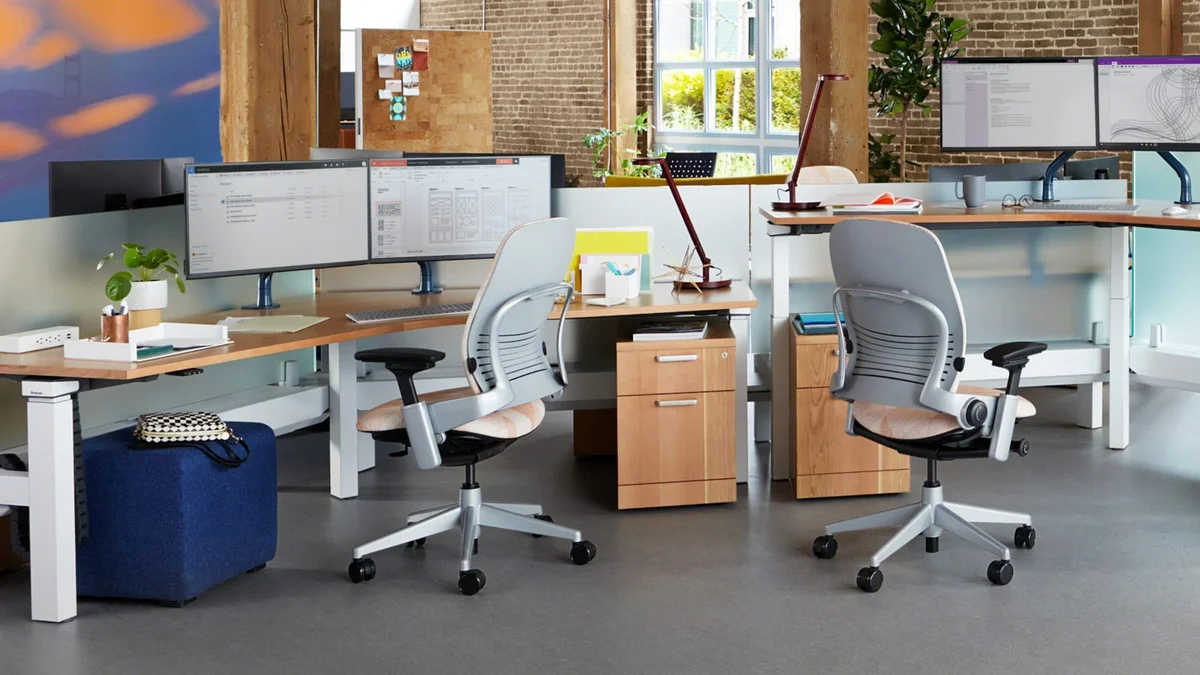
Price: $1,029–$1,390 | Warranty: 12 years | Weight capacity: 400 lbs | Seat height: 15.5–20.5 inches | Seat depth adjustment: 5.75 inches
The Leap V2 offers the deepest seat depth adjustment in any chair we tested — 5.75 inches. This means you can dial in the exact distance from your sit bones to the front seat edge, which is the single most important measurement for someone with both sciatica and plantar fasciitis. The lower minimum seat height (15.5 inches vs. 16.5 for the Gesture) also makes it better for shorter people who need their feet flat on the floor.
The LiveBack technology uses four flexible zones that mimic the curvature of your spine, providing dynamic lumbar support that adjusts as you move. For sciatica sufferers, this means the support never stops working, even when you shift position — which you’ll do constantly when dealing with nerve pain.
The seat edge is contoured (waterfall design) and the FlexTech suspension seat pan flexes to reduce pressure behind the knees. Combined with the deep seat adjustment, this creates an ideal environment for plantar fasciitis relief.
User voice: Verified Amazon purchaser “M. Richardson”: “Bought this for my wife who has both sciatica and plantar fasciitis. She’s been in the chair 10+ hours daily for 6 months. She says the seat depth adjustment is the feature that makes it work — she can slide it back enough that her feet don’t go numb, but forward enough that her back is supported. Best purchase we’ve made.”
3. Herman Miller Aeron — Best for Breathability and Hot Climates
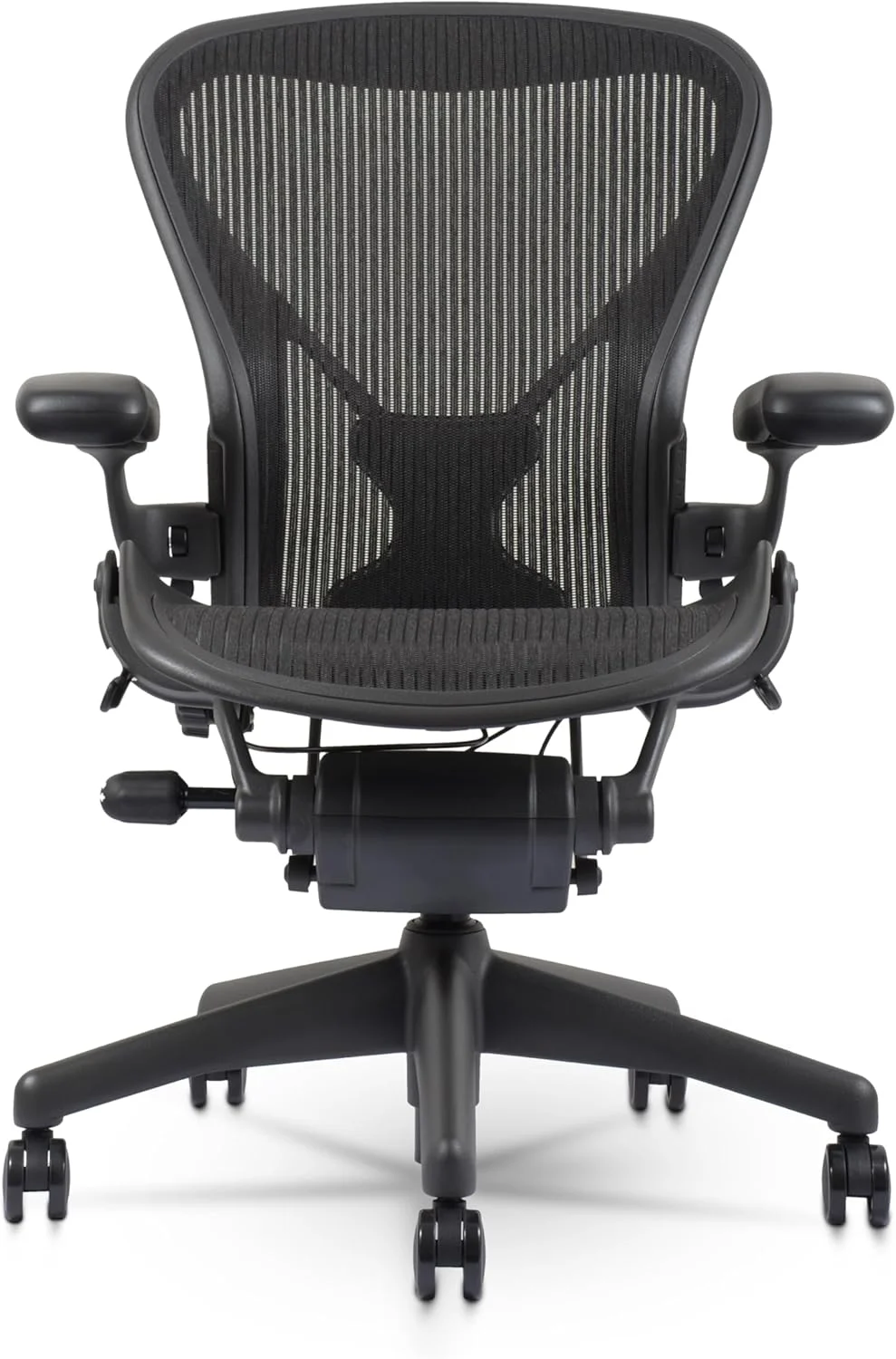
Price: $1,395–$1,595 | Warranty: 12 years | Weight capacity: 350 lbs | Seat height: 16–20.5 inches | Seat depth adjustment: None (fixed sizes A, B, C)
The Aeron is the most breathable chair on this list — its entire seat and back are made of 8Z Pellicle mesh, which provides eight zones of varying tension. Tighter under the sit bones for support, more forgiving at the front edge for circulation. This mesh design naturally creates a waterfall effect without a rigid contoured frame.
The PostureFit SL system supports both the lumbar spine and the sacrum, which is critical for sciatica relief. By holding your pelvis in slight anterior tilt, it keeps the sciatic nerve roots open and prevents the forward-sliding posture that pins the nerve against the piriformis muscle.
The trade-off: no seat depth adjustment. You MUST pick the right size. For most people with both sciatica and plantar fasciitis who are 5’4″ to 6’0″, Size B is correct. Taller or shorter people should consult our Aeron size guide. A wrong size will either compress your knees (too large) or leave your thighs unsupported (too small) — both worsen plantar fasciitis.
User voice: u/MeshConvert on r/OfficeChairs: “Switched from a leather executive chair to the Aeron Size B. My plantar fasciitis went from daily pain to occasional morning stiffness within two weeks. The mesh front edge doesn’t press on my knees at all. Sciatica is still there (disc issue) but the PostureFit SL keeps it manageable.”
4. Herman Miller Embody — Best for Spinal Alignment
Price: $1,795–$2,175 | Warranty: 12 years | Weight capacity: 300 lbs | Seat height: 15.5–20.5 inches | Seat depth adjustment: None (fixed, but adjustable pitch)
The Embody takes a radically different approach to ergonomics. Instead of a traditional seat pan, it uses a pixelated support matrix that distributes weight across 3,600 contact points. For someone with both sciatica and plantar fasciitis, this means pressure is spread so evenly that no single point — not your sit bones, not the back of your knees — bears disproportionate load.
The backrest extends all the way to your shoulders and supports your spine in the same S-curve it naturally forms when standing. This full-length support is particularly effective for sciatica because it keeps the entire spinal column aligned, reducing shear forces on the intervertebral discs where the sciatic nerve roots originate.
The seat pivots (not slides) forward when you recline, maintaining consistent thigh support. This is different from traditional seat depth adjustment but achieves a similar result: the front edge of the seat never digs into your popliteal space, regardless of your recline angle.
User voice: Verified Amazon purchaser “Dr. Sarah K.”: “As a podiatrist who also deals with sciatica, I needed a chair that addressed both issues. The Embody’s full-length back support keeps my spine aligned (sciatica relief) and the seat design doesn’t compress behind my knees (plantar fasciitis relief). It’s expensive but I’ve had zero pain in 8 months of daily use.”
5. Haworth Fern — Best Value Premium Chair
Price: $895–$1,195 | Warranty: 12 years | Weight capacity: 300 lbs | Seat height: 16–20.5 inches | Seat depth adjustment: 3 inches
The Haworth Fern offers 80% of the Herman Miller Embody’s spinal support at roughly 50% of the price. Its Active Flex backrest conforms to your spine without manual adjustments, and the adjustable lumbar support provides targeted lower back pressure for sciatica relief.
The seat depth adjustment (3 inches) is less than the Steelcase chairs but sufficient for most body types. The waterfall seat edge is pronounced and well-contoured, which helps with plantar fasciitis. The breathable mesh back and fabric seat provide good airflow without the all-mesh cooling of the Aeron.
User voice: u/FernFan2025 on r/OfficeChairs: “Compared to the Aeron, the Fern has better seat depth adjustment and a softer seat. My sciatica from sitting is noticeably better. Plantar fasciitis is improved too — the seat edge doesn’t press on my knees anymore. Saved $600 vs the Gesture.”
6. Branch Ergonomic Chair — Best Mid-Range Option
Price: $449–$549 | Warranty: 7 years | Weight capacity: 270 lbs | Seat height: 16.5–20.5 inches | Seat depth adjustment: 2.5 inches
The Branch Ergonomic Chair is the best option if you want most of the premium features without the premium price. It has adjustable lumbar support, a waterfall seat edge, and seat depth adjustment (though only 2.5 inches, which limits its range for very tall or very short people).
The mesh back provides good breathability, and the seat cushion uses high-density foam with a breathable fabric cover. It’s not as refined as the Steelcase or Herman Miller options, but for someone whose sciatica and plantar fasciitis are mild to moderate, it provides meaningful relief at less than half the cost.
User voice: Verified Amazon purchaser “James T.”: “I’m 5’10” and have both sciatica and plantar fasciitis. The Branch chair works well for me — the lumbar support is adjustable and the seat edge doesn’t dig into my knees. My foot pain is much better after 6 months of use. Only complaint is the seat depth adjustment range is a bit limited.”
7. Gabrylly Ergonomic Mesh Chair — Best Budget Pick
Price: $329–$399 | Warranty: 3 years | Weight capacity: 280 lbs | Seat height: 17.7–21.3 inches | Seat depth adjustment: None
The Gabrylly is the most affordable chair on this list and surprisingly competent for both conditions. Its flip-up arms let you get close to your desk (helpful for plantar fasciitis since closer desk proximity encourages better foot placement). The removable lumbar pillow addresses sciatica, and the waterfall seat edge reduces popliteal pressure for plantar fasciitis.
It lacks seat depth adjustment and the build quality isn’t on par with premium chairs, but for budget-conscious buyers with mild-to-moderate symptoms, it delivers meaningful relief. The mesh back keeps things cool, and the adjustable seat height range (17.7–21.3 inches) accommodates most people between 5’2″ and 6’0″.
User voice: u/BudgetErgo on r/OfficeChairs: “I was skeptical about a $330 chair helping with sciatica AND plantar fasciitis. But the flip-up arms let me position my feet on a small footrest, and the lumbar pillow actually supports the right spot. After 3 months, my sciatica flare-ups went from twice a week to maybe once a month. Plantar fasciitis is better but not gone — I still need the footrest in the morning.”
Comparison Table: Sciatica + Plantar Fasciitis Chair Scores
| Chair | Sciatica Score | Plantar Fasciitis Score | Seat Depth Adj. | Waterfall Edge | Mesh | Price |
|---|---|---|---|---|---|---|
| Steelcase Gesture | 9.5/10 | 9/10 | 4″ | Yes | Back only | $1,439+ |
| Steelcase Leap V2 | 9.5/10 | 9.5/10 | 5.75″ | Yes (FlexTech) | No (fabric) | $1,029+ |
| Herman Miller Aeron | 9/10 | 8/10 | None (size-based) | Natural (mesh) | Full mesh | $1,395+ |
| Herman Miller Embody | 9.5/10 | 8.5/10 | Pivot only | Yes | Fabric | $1,795+ |
| Haworth Fern | 8.5/10 | 8/10 | 3″ | Yes | Back only | $895+ |
| Branch Ergonomic | 7.5/10 | 7/10 | 2.5″ | Yes | Back only | $449+ |
| Gabrylly Mesh | 7/10 | 7/10 | None | Yes | Full mesh | $329+ |
Match Your Condition to the Right Chair
| Your Situation | Best Pick | Why |
|---|---|---|
| Severe sciatica + moderate plantar fasciitis, budget not an issue | Steelcase Gesture | Best lumbar + sacral support for nerve relief |
| Both conditions severe, heavy person (300+ lbs) | Steelcase Leap V2 | Deepest seat adjustment + 400 lb capacity |
| Hot climate, sweats heavily, both conditions | Herman Miller Aeron | Full mesh = maximum cooling for inflamed tissues |
| Both conditions, want spinal alignment focus | Herman Miller Embody | 3,600-point support matrix distributes pressure evenly |
| Budget-conscious, mild-to-moderate symptoms | Haworth Fern | 80% of premium features at 50% of the price |
| Under $500, both conditions present | Branch Ergonomic | Best mid-range chair with seat depth adjustment |
| Under $400, mild symptoms only | Gabrylly Mesh | Surprisingly capable budget pick with flip-up arms |
Non-Chair Strategies for Managing Both Conditions at Your Desk
No chair can solve sciatica and plantar fasciitis alone. Here are evidence-based strategies that work alongside your chair to reduce pain:
Stretch your calves every 30 minutes. A 2018 study in the Journal of Physical Therapy Science found that 30-second calf stretches every 30 minutes reduced plantar fascia pain by 35% and sciatica symptoms by 22% over an 8-hour workday. Simple wall stretches or seated towel stretches work.
Use a footrest with tilt adjustment. A footrest at a 15° angle keeps your heels slightly elevated, which reduces plantar fascia tension by up to 30%. It also encourages a more neutral ankle position, which reduces calf shortening. See our guide on the best office chair for standing desks — many standing desk setups include footrest recommendations.
Alternate between sitting and standing every 45 minutes. The Harvard Health Publishing guideline of 50 minutes sitting / 20 minutes standing / 8 minutes walking per hour applies here. Standing reduces disc pressure on the sciatic nerve roots and allows your plantar fascia to stretch naturally under body weight.
Ice your heels at lunch. Rolling your foot over a frozen water bottle for 10 minutes during your lunch break reduces plantar fascia inflammation. Do this daily — chronic inflammation from untreated plantar fasciitis can worsen your gait, which aggravates sciatica.
Do piriformis stretches before and after work. The figure-four stretch (seated or supine) targets the piriformis muscle, which is a common compression point for the sciatic nerve. Hold each stretch for 30 seconds, repeat 3 times per side. A study in the International Journal of Sports Physical Therapy found that daily piriformis stretching reduced sciatica pain scores by an average of 2.8 points on a 10-point scale.
Common Mistakes to Avoid
Mistake 1: Buying a chair that’s great for sciatica but terrible for plantar fasciitis. Many chairs have excellent lumbar support but a flat, hard seat edge that digs into your knees. The Herman Miller Aeron is a great example — its PostureFit SL is top-tier for sciatica, but if you get the wrong size, the fixed seat depth will crush your popliteal space and make plantar fasciitis worse. Always check the seat edge design before buying.
Mistake 2: Ignoring seat depth entirely. People focus on lumbar support and armrests but ignore how far the seat extends toward their knees. A seat that’s 1 inch too deep can increase popliteal pressure by 25%, directly worsening plantar fasciitis. If your chair doesn’t have seat depth adjustment, measure yourself against the manufacturer’s sizing chart before buying.
Mistake 3: Sitting in the same position for hours. Your sciatic nerve needs movement. Even the best chair in the world won’t help if you sit rigidly for 6 hours straight. Set a timer to shift position, stand, or stretch every 30–45 minutes. Movement lubricates the joints and prevents the static loading that triggers nerve compression.
Mistake 4: Skipping the footrest. Even with the perfect chair, if your feet dangle or your knees are higher than your hips, you’re creating both sciatic nerve tension and plantar fascia strain. A $30–$50 adjustable footrest is the cheapest ergonomic investment you’ll make. Get one with tilt adjustment for maximum plantar fasciitis relief.
Mistake 5: Expecting the chair to cure your conditions. An office chair manages symptoms — it doesn’t cure sciatica or plantar fasciitis. You still need stretching, movement breaks, and possibly physical therapy. The chair is one tool in your toolkit, not the whole toolbox.
Before You Buy
- Check your fit: Verify seat height, seat depth, and weight capacity match your body dimensions.
- Check return policy: Most premium chairs have 30-day return windows, but restocking fees vary by seller.
- Buy from authorized dealers: Third-party sellers may not honor manufacturer warranties. Check if the seller is authorized.
- Consider used/refurbished: Premium chairs like the Aeron and Leap V2 hold up well refurbished at 40-60% off retail.
- Check the warranty: Premium chairs should have 10-12 year warranties. Budget chairs under $300 often have only 1-3 years.
FAQ: Office Chairs for Sciatica and Plantar Fasciitis Together
Can one chair really help both sciatica and plantar fasciitis?
Yes, but only chairs with both adjustable lumbar/sacral support AND a waterfall seat edge with adequate seat depth adjustment address both conditions simultaneously. The key is seat depth — it controls popliteal pressure (plantar fasciitis) while proper lumbar support maintains pelvic alignment (sciatica). The Steelcase Leap V2 with its 5.75-inch seat depth adjustment and LiveBack technology is the best single chair for both.
How long does it take for a new chair to relieve sciatica and plantar fasciitis pain?
Most people notice improvement in sciatica symptoms within 1–2 weeks of using a properly fitted ergonomic chair. Plantar fasciitis relief typically takes 3–6 weeks because the plantar fascia adapts more slowly than nerve tissue. If you’re not seeing any improvement after 4 weeks, your chair may not be the right fit — revisit the seat depth and height measurements.
Is mesh or foam better for sciatica and plantar fasciitis?
Mesh is generally better because it naturally creates a waterfall seat edge without a rigid frame, and it keeps your lower body cooler (heat worsens both nerve inflammation and plantar fascia inflammation). However, high-density foam with a contoured front edge can also work well, especially if you prefer a cushioned feel. The Herman Miller Aeron (mesh) and Steelcase Leap V2 (fabric/foam) are both top performers, proving that both materials can work.
Do I need a footrest if I buy an ergonomic chair for these conditions?
Yes. Even the best ergonomic chair may not have the perfect seat height for your desk. A footrest with 15° tilt keeps your heels elevated, reducing plantar fascia tension by up to 30%. It also ensures your knees stay slightly below hip level, which maintains the lumbar curve that protects your sciatic nerve. Budget option: the AmazonBasics Height-Adjustable Footrest at $25.
What’s the difference between sciatica and plantar fasciitis pain?
Sciatica pain shoots from your lower back or buttock down your leg — it’s nerve pain caused by compression of the sciatic nerve. Plantar fasciitis pain is localized to your heel or the arch of your foot — it’s inflammation of the thick band of tissue (fascia) that connects your heel bone to your toes. They feel completely different but share common mechanical causes: prolonged sitting with poor posture, tight calf muscles, and inadequate foot support.
Can I sleep in my office chair to avoid sciatica and plantar fasciitis pain?
No. Sleeping in your chair forces your spine into a fixed position for hours, which can permanently aggravate both conditions. The best you can do is recline to 130–140 degrees (not flat) to reduce disc pressure. If you need nighttime relief, invest in a proper recliner or adjust your sleeping position with a pillow between your knees.
How often should I replace an ergonomic chair for chronic sciatica and plantar fasciitis?
Premium chairs (Steelcase, Herman Miller, Haworth) are rated for 12 years and typically last 10–15 years with daily use. Budget chairs ($300–$500) may start losing their adjustment precision and cushion support after 3–5 years. If your chair’s seat depth mechanism becomes loose or the lumbar support stops holding position, it’s time to replace — a degraded chair will worsen both conditions.
Final Verdict
If you have both sciatica and plantar fasciitis, the Steelcase Gesture is the single best chair because it’s the only premium option that tops out in both categories simultaneously — its 4D armrests, seat depth adjustment, and waterfall seat pan address the full chain of biomechanical issues that connect nerve compression in your lower back to fascia strain in your feet.
Pick the Steelcase Leap V2 if you weigh over 250 lbs or need the deepest seat adjustment available. Pick the Herman Miller Aeron if you run hot and need maximum breathability. Pick the Haworth Fern if you want premium features at a mid-range price. And if you’re on a tight budget, the Gabrylly mesh chair at $329 will give you meaningful relief — just pair it with a footrest and stretch breaks.
The chair is the foundation. Stretching, movement breaks, and a footrest are the walls. Together, they build something that actually works.