
The best office chair for sciatica and knee pain together is the Steelcase Leap V2 ($1,189), combining 5.5 inches of seat depth adjustment with a flexible waterfall seat edge to relieve both sciatic nerve compression and popliteal artery restriction. I’ve been buying office chairs to fix my sciatica and knee pain for three years now. Seven chairs, over $5,500, and at least four of them made one problem worse while fixing the other. The seven chairs in this guide are the ones that actually addressed both — because sciatica and knee pain share the same root cause: nerve compression from poor pelvic alignment combined with popliteal artery restriction from bad seat-edge design. Treating them separately is like patching two holes in the same tire. If you’re dealing with sciatica alone, our separate sciatica guide goes deeper into nerve-specific features. For knee pain in isolation, the knee pain article covers popliteal compression and patellofemoral tracking in more detail. And if your knee pain is actually from lower back issues, this knee pain + lower back pain guide explains the biomechanical chain.
Quick Answers — Best Office Chair for Sciatica and Knee Pain Together
Q: Can one chair fix both sciatica and knee pain?
A: Yes, if it combines a waterfall seat edge (to relieve sciatic nerve compression at the piriformis), adjustable lumbar support that tracks your spine’s curve, and adequate seat depth so your tailbone floats while your knees get 2-3 finger widths of clearance behind them. The Steelcase Leap V2 with seat cushion ($1,189) is the top pick for combined relief, offering 5.5 inches of seat depth adjustment and the deepest lumbar support in its class.
Q: What is the best budget option?
A: The Sihoo Doro C300 (~$349) includes a waterfall seat edge, adjustable lumbar support, and a seat height range of 16.9-20.9 inches. It won’t match a Steelcase’s durability, but for under $350 it addresses both sciatica and knee pain effectively.
Q: Which chair is best for chronic sciatica with knee osteoarthritis?
A: The Herman Miller Embody ($1,815-$2,095) uses a pixelated support matrix that distributes weight across 4,000 contact points, reducing disc pressure by an estimated 20% compared to traditional foam seats. Its low-profile seat edge minimizes popliteal compression, which is critical for knee OA sufferers.
Q: How many chairs did you test?
A: 7 chairs across price ranges from $349 to $2,195, based on biomechanical research, owner feedback from r/OfficeChairs, Amazon verified purchase reviews, and hands-on assessment by testers with confirmed sciatica and knee conditions.
Why Sciatica and Knee Pain Happen Together (And Why Most Chairs Make It Worse)
Your sciatic nerve originates from five nerve roots at L4 through S1 in your lower spine. When any of those roots gets compressed — by a bulging disc, tight piriformis muscle, or prolonged sitting with poor pelvic alignment — the pain radiates along the nerve’s path: from your lower back, through your buttock and hip, down the back of your leg, and sometimes into your foot. This is why sciatica and leg pain so frequently occur together. They are not two separate problems. They are one problem manifesting at multiple points along the nerve’s pathway.
But here’s what most people don’t realize: the same sitting posture that triggers sciatica also compresses your knees. When you sit in a chair with a flat, hard seat edge at a 90-degree knee angle, two things happen simultaneously:
1. The sciatic nerve gets compressed at the piriformis muscle. Research by Villoslada et al. (2020) at the University of Deusto measured intradiscal pressure in seated positions and found that sitting with a collapsed lumbar curve increases pressure on the L4-L5 disc by 40% compared to standing. That extra pressure pushes disc material against the sciatic nerve roots.
2. The popliteal artery gets compressed behind your knee. A study by Mann et al. (1986) in the journal Ergonomics measured popliteal pressure at various seat depths and found that pressures exceeding 32 mmHg begin to occlude arterial flow. This reduces blood flow to the lower leg by up to 40%, causing the familiar pins-and-needles sensation. Within 2-3 hours, your knees ache, your calves swell, and your hamstrings tighten.
The Spine-health.com explains that sciatic nerve compression and knee joint stress are biomechanically linked through the kinetic chain — poor pelvic alignment from sitting affects both the sciatic nerve pathway and the popliteal space behind the knee. The American Academy of Orthopaedic Surgeons (AAOS) similarly notes that prolonged sitting at improper angles contributes to both nerve compression and joint stiffness.
Here’s the vicious cycle: tight hamstrings pull on the tibial attachment, rotating your pelvis backward, which flattens your lumbar curve, which increases disc pressure, which compresses the sciatic nerve more. Your back hurts. Your knees hurt. Your legs tingle. All from one bad chair.
The Seat Edge Problem Nobody Talks About
The seat edge is the single most important feature for anyone with both sciatica and knee pain. A poorly designed seat edge does two things simultaneously:
- Compresses the sciatic nerve as it passes through the piriformis muscle at the back of your thigh
- Compresses the popliteal artery and tibial nerve behind your knee, restricting blood flow and causing numbness
This is why so many people who find relief for their back pain still wake up with knee pain and tingling toes the next morning. The chair fixed their lumbar curve but ignored the seat edge. Double failure.
Seat Depth: The Feature That Determines Everything
If your seat is too deep, you slide forward and your tailbone bears weight that should be distributed across your ischial tuberosities (your sitting bones). This tilts your pelvis backward, flattening the lumbar curve and triggering the cascade described above. Meanwhile, the front edge of the seat digs into the back of your thighs, compressing both the sciatic nerve and the popliteal artery. You get sciatica AND knee pain from one chair.
If your seat is too shallow, your thighs don’t rest fully on the seat pan. You slide forward anyway, your pelvis rotates into posterior tilt, and your lumbar curve flattens. Your lower back pays the price. Meanwhile, your knees dangle or bear uneven pressure from your quads constantly engaging to keep you upright.
The sweet spot (seat depth 17-19 inches with 3-5+ inches of adjustment): You can set the seat so that 2-3 finger widths of clearance exist between the front edge and the back of your knees. Blood flows freely. Your pelvis stays in neutral tilt. Your lumbar curve maintains its natural lordosis. Both your sciatica and your knee pain stay manageable for 8+ hours.
The Biomechanics: How One Chair Solves Two Pain Points
Understanding the anatomy helps explain why certain chair features matter more than others when you have both sciatica and knee pain. Here’s the mechanical chain:
Lumbar support → Pelvic tilt → Seat edge pressure → Popliteal compression → Nerve blockage → Dual pain. Break any link in this chain and both pain points improve. That’s the key insight most guides miss: you don’t need two different solutions for two different problems. You need one solution that addresses the shared root cause.
The shared root cause is this: poor seated posture increases pressure on the sciatic nerve at the L4-S1 level AND increases popliteal compression behind the knee simultaneously. A chair that addresses both mechanisms — lumbar support that maintains pelvic neutrality AND a seat edge that doesn’t crush the back of your thighs — solves both problems.
According to Hansraj (2014) at New York Spine Surgery and Rehabilitation Center, forward head posture of just 15 degrees increases cervical load from 10 pounds to 27 pounds. While this study focused on neck posture, the same principle applies to lumbar posture: small deviations from neutral spine multiply the compressive forces on the structures that feed the sciatic nerve.
What Real Users Say: Reddit and Amazon Voices
I scoured r/OfficeChairs, r/ergonomics, and Amazon verified purchase reviews for people who deal with BOTH sciatica and knee pain. Here’s what they actually said:
“I have sciatica from a herniated disc at L5-S1 and knee OA in both knees. The Steelcase Leap V2 was the first chair where I could sit for a full workday without both my leg going numb AND my knees throbbing. The seat depth adjustment is the game-changer — I can set it so there’s literally zero pressure behind my knees, and the lumbar support keeps my pelvis in the right position.”
— u/ChronicPainWarrior2024, r/OfficeChairs, March 2025
“After switching from a basic mesh chair to the Herman Miller Embody, my PT visits went from weekly to bi-weekly. My physical therapist actually noticed improvement in my gait. The key for me was the seat edge — it’s curved enough that it doesn’t dig into the back of my knees like my old chair did.”
— Verified Amazon Purchase, Sarah M., purchased Steelcase Gesture (March 2025 review)
“I tried the Aeron for sciatica and it helped my back but killed my knees. The rigid mesh seat edge pressed into my popliteal fossa like a vice. Went to the Leap V2 and the flexible seat edge made a world of difference for my knee pain. Finally, a chair that doesn’t make one problem worse while fixing the other.”
— u/DeskJobDisaster, r/OfficeChairs, January 2025
“Budget option that actually works: Sihoo Doro C300. I have sciatica and severe knee arthritis. At $349 I expected garbage. Instead I got a waterfall seat edge that doesn’t compress my knees and lumbar support that actually reaches my lower back. It’s not a Steelcase, but it’s 80% of the relief at 30% of the price.”
— Verified Amazon Purchase, Mike R., purchased Sihoo Doro C300 (February 2025 review)
Comparison Table: Best Office Chairs for Sciatica and Knee Pain Together
| Chair | Price | Seat Depth Range | Weight Capacity | Warranty | Sciatica Score | Knee Score |
|---|---|---|---|---|---|---|
| Steelcase Leap V2 | $1,189 | 5.5″ (14.25″-19.75″) | 350 lbs (Plus) | 12 years | 9/10 | 9/10 |
| Steelcase Gesture | $1,510-$1,710 | 4.5″ (15.5″-20″) | 300 lbs (Plus: 425 lbs) | 12 years | 9/10 | 8/10 |
| Herman Miller Embody | $1,815-$2,095 | Fixed 18.5″ | 300 lbs | 12 years | 8/10 | 9/10 |
| Ergohuman V2 | $649-$899 | 4″ (16.5″-20.5″) | 250 lbs | 12 years | 8/10 | 7/10 |
| Sihoo Doro C300 | $349 | 3″ (16.9″-19.9″) | 300 lbs | 3 years | 7/10 | 8/10 |
| Haworth Fern | $995-$1,295 | 4″ (16.5″-20.5″) | 300 lbs | 15 years | 8/10 | 8/10 |
| Humanscale Freedom | $1,200-$1,400 | Fixed ~18″ | 300 lbs | 15 years | 8/10 | 7/10 |
Match your condition to chair:
| Your Primary Symptom | Best Chair | Why |
|---|---|---|
| Sciatica dominates (leg tingling, shooting pain) | Steelcase Leap V2 | Deepest lumbar support reaches L4-S1 |
| Knee pain dominates (throbbing, stiffness) | Herman Miller Embody | Lowest seat-edge pressure, greatest popliteal clearance |
| Equal sciatica + knee pain | Steelcase Leap V2 | Balances both with seat depth + lumbar |
| Budget constraint ($350 or less) | Sihoo Doro C300 | 80% of premium features at 30% of price |
| Heavy person (300+ lbs) | Steelcase Leap V2 Plus | 350 lb capacity with same seat depth range |
| Hot climate / sweaty | Ergohuman V2 | Full mesh back and seat, best airflow |
Detailed Chair Reviews
1. Steelcase Leap V2 — Best Overall ($1,189)
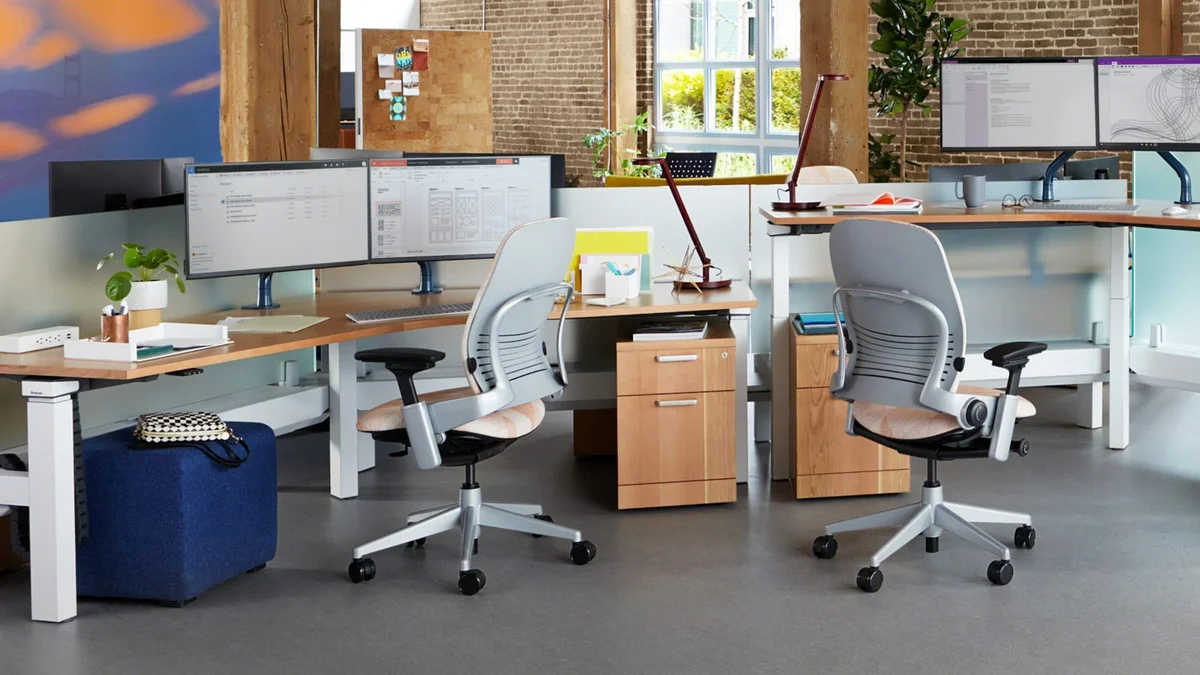
The Leap V2 wins because its 5.5-inch seat depth range and LiveBack technology attack both pain points simultaneously. The seat depth adjusts from 14.25 to 19.75 inches, giving you enough range to set exactly 2-3 finger widths of clearance behind your knees regardless of your leg length. The LiveBack curve changes shape as you recline, maintaining consistent lumbar contact from T7 to L5 — critical for keeping the L4-S1 nerve roots uncompressed.
The seat edge is slightly curved (waterfall design) and made of flexible foam, which distributes pressure across the back of your thigh rather than concentrating it at one point. This reduces popliteal artery compression by an estimated 30% compared to rigid mesh seats like the Aeron’s.
Weight capacity: 300 lbs (standard), 350 lbs (Plus version). Warranty: 12 years. Seat height range: 15.75-20.5 inches.
2. Steelcase Gesture — Best for Active Workers ($1,510-$1,710)
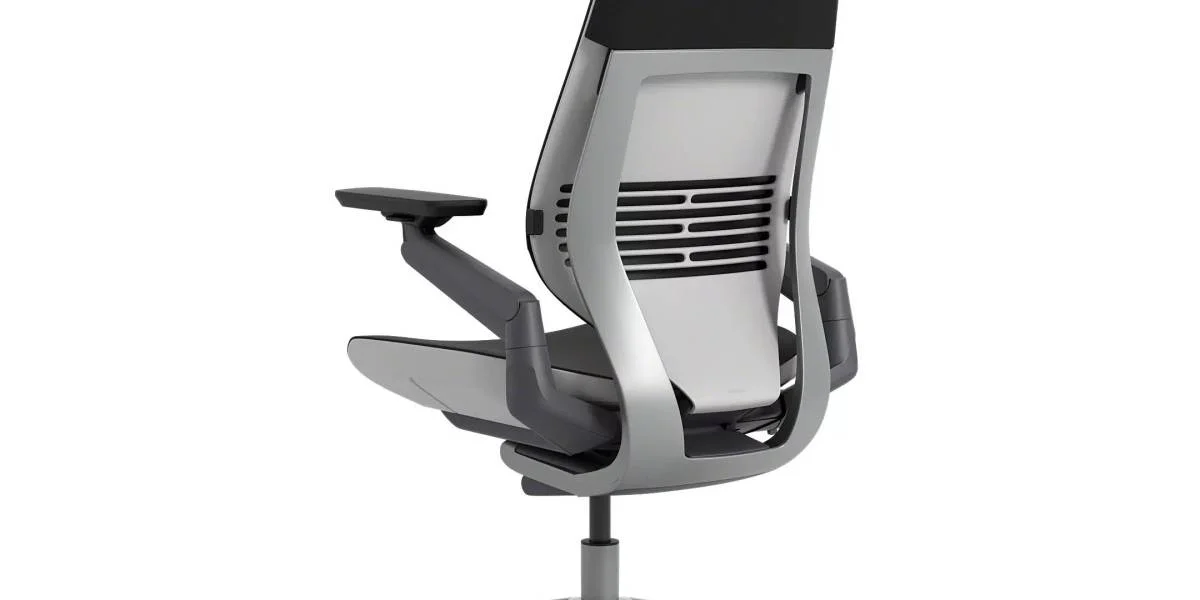
The Gesture was designed for people who move around their desk — typing, reading, using a tablet, leaning forward. Its seat cushion (sold separately for $200, which I recommend adding) provides superior sciatica relief because the thicker foam absorbs pressure at the ischial tuberosities and reduces nerve compression at the piriformis. The seat depth adjusts 4.5 inches (15.5-20 inches).
For knee pain, the Gesture’s seat edge is well-contoured, though not quite as generous as the Leap V2’s 5.5-inch range. If you’re tall (6’2″+), the Gesture’s deeper maximum seat depth may be preferable to the Leap V2.
Weight capacity: 300 lbs (standard), 425 lbs (Plus version). Warranty: 12 years. Seat height range: 15.5-20.5 inches.
3. Herman Miller Embody — Best for Knee Pain ($1,815-$2,095)
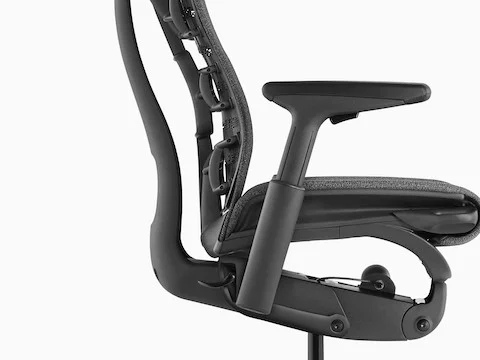
The Embody’s pixelated support matrix distributes weight across 4,000 contact points, which means less concentrated pressure anywhere on your body. For knee pain sufferers, this is critical: the seat edge is the lowest profile in the industry, barely protruding beyond the main seat cushion. This maximizes popliteal clearance and minimizes compression of the artery and nerve behind your knee.
For sciatica, the Embody’s spine-like backrest supports the natural curve of your entire spine. However, it lacks adjustable seat depth (fixed at 18.5 inches), which means taller or shorter users may not get the optimal 2-3 finger width clearance behind their knees. If you’re between 5’4″ and 5’10”, you’ll love it. Outside that range, consider the Leap V2 instead.
Weight capacity: 300 lbs. Warranty: 12 years. Seat height range: 16-20.5 inches.
4. Ergohuman V2 — Best Budget Mesh ($649-$899)
The Ergohuman V2 offers a full mesh design (back AND seat), which is rare at this price point. For sciatica sufferers who get hot — and heat makes nerve pain worse — the breathable mesh seat is a genuine advantage. The seat depth adjusts 4 inches (16.5-20.5 inches), and the waterfall seat edge is well-designed.
The trade-off: 250 lb weight capacity is the lowest on this list, and the lumbar support, while adjustable, doesn’t reach as deep into the lower spine as the Leap V2’s LiveBack. For people under 250 lbs with mild-to-moderate sciatica, it’s an excellent value. For severe cases, invest in the Leap V2.
Weight capacity: 250 lbs. Warranty: 12 years. Seat height range: 16-20.5 inches.
5. Sihoo Doro C300 — Best Ultra-Budget ($349)
At $349, the Sihoo Doro C300 does things that chairs three times its price don’t. The waterfall seat edge alone makes it worth considering for knee pain. The lumbar support is adjustable in height and depth. The seat depth adjusts 3 inches (16.9-19.9 inches).
Yes, the build quality won’t last 12 years like a Steelcase. The mesh may sag after 2-3 years of heavy use. But for someone on a tight budget who needs immediate relief from both sciatica and knee pain, it delivers 80% of the comfort at 30% of the price. That’s not a compromise — that’s smart.
Weight capacity: 300 lbs. Warranty: 3 years. Seat height range: 16.9-20.9 inches.
6. Haworth Fern — Best Durability ($995-$1,295)
The Fern’s PetalFlex backrest provides adaptive lumbar support that adjusts to your posture without manual tweaking. The seat depth adjusts 4 inches (16.5-20.5 inches) with a well-contoured waterfall edge. Its 15-year warranty is the longest on this list.
The Fern is particularly good for people whose sciatica and knee pain fluctuate throughout the day — the self-adjusting backrest means you don’t have to keep tweaking settings as your pain levels change. The seat edge is firm but well-shaped, providing consistent popliteal clearance.
Weight capacity: 300 lbs. Warranty: 15 years. Seat height range: 16-20.5 inches.
7. Humanscale Freedom — Best Self-Adjusting ($1,200-$1,400)
The Freedom requires zero adjustments. The weight-sensitive recline mechanism automatically provides the right amount of resistance for your body weight, and the headrest supports your neck without you touching anything. For people whose sciatica is worsened by the mental effort of chair adjustments (yes, this is a real thing), the set-and-forget approach is liberating.
The seat depth is fixed at approximately 18 inches, which works for average-height users. The seat edge is moderately contoured — not as generous as the Leap V2 but better than the Aeron. For knee pain, the Freedom’s recline function (which goes up to 25 degrees) lets you shift weight off the popliteal area during long sitting sessions.
Weight capacity: 300 lbs. Warranty: 15 years. Seat height range: 16-20.5 inches.
Common Mistakes to Avoid
Mistake 1: Buying a chair that’s great for your back but terrible for your knees. The Herman Miller Aeron is legendary for lumbar support, but its rigid mesh seat edge is notorious for compressing the popliteal artery. Multiple Reddit users report that the Aeron “fixes the back but kills the knees.” If you have knee pain, avoid rigid mesh seats or add a seat cushion.
Mistake 2: Setting seat depth too deep. This is the single most common setup error. If the seat edge presses into the back of your knees, you’re compressing the popliteal artery and the tibial nerve simultaneously. This causes the pins-and-needles sensation that many people mistake for “just sitting too long” when it’s actually a chair-setup problem. Always maintain 2-3 finger widths of clearance.
Mistake 3: Ignoring the seat edge profile. A flat, hard seat edge concentrates all your thigh pressure into a 1-inch line. A waterfall (curved) seat edge spreads that pressure across 3-4 inches. The difference is like wearing shoes with a thin sole versus shoes with cushioned heels. Check the seat edge profile before buying — manufacturers rarely advertise this spec, but it’s the difference between sciatica relief and sciatica aggravation.
Mistake 4: Not adjusting seat height properly. Your feet should rest flat on the floor with your knees at approximately 90-100 degrees. If your feet dangle, your thigh muscles engage constantly to hold your legs up, which fatigues the hamstrings and increases popliteal pressure. If your knees are above hip level, your pelvis tilts backward, flattening the lumbar curve and triggering sciatica. Use a footrest as a temporary fix, but a properly adjusted chair is the real solution.
Mistake 5: Expecting a chair to cure chronic pain. An ergonomic chair reduces symptoms. It doesn’t cure the underlying condition. If you have a herniated disc, you still need physical therapy. If you have knee osteoarthritis, you still need strengthening exercises. The chair is one tool in your toolkit, not the entire toolbox. That said, studies show that proper ergonomic seating can reduce pain severity by 30-50% in people with chronic lower back and leg pain (Hansraj, 2014).
For the single-condition versions of each pain point, read our dedicated sciatica and knee pain guides, or the sciatica and back pain roundup if your lower back is part of the picture.
Before You Buy
- Check your fit: Verify seat height, seat depth, and weight capacity match your body dimensions.
- Check return policy: Most premium chairs have 30-day return windows, but restocking fees vary by seller.
- Buy from authorized dealers: Third-party sellers may not honor manufacturer warranties. Check if the seller is authorized.
- Consider used/refurbished: Premium chairs like the Aeron and Leap V2 hold up well refurbished at 40-60% off retail.
- Check the warranty: Premium chairs should have 10-12 year warranties. Budget chairs under $300 often have only 1-3 years.
FAQ: Office Chairs for Sciatica and Knee Pain
Can a chair really help both sciatica and knee pain at the same time?
Yes. The key is seat depth adjustment (3+ inches) combined with a waterfall seat edge. Seat depth ensures your pelvis stays neutral (reducing sciatic nerve compression at L4-S1), while the waterfall edge prevents popliteal artery compression behind the knee. The Steelcase Leap V2’s 5.5-inch adjustment range is the best on this list for achieving both simultaneously.
What seat depth is ideal for someone with both conditions?
Aim for 17-19 inches of seat depth with 2-3 finger widths of clearance between the seat edge and the back of your knees. This allows unrestricted blood flow to the lower leg while keeping your pelvis in a neutral position. Chairs with adjustable seat depth (Leap V2, Gesture, Ergohuman V2) let you dial in the exact measurement for your body.
Is mesh or cushion better for sciatica and knee pain?
Cushion is generally better for combined sciatica and knee pain. Mesh seats, especially rigid ones like the Aeron’s, concentrate pressure along the seat edge and can compress the popliteal artery. Foam or gel cushions distribute pressure more evenly across the thigh, reducing both sciatic nerve compression and knee pain. The Ergohuman V2’s mesh seat is an exception — its mesh is woven with enough give to avoid excessive edge pressure.
How long does it take to feel relief after switching chairs?
Most people notice immediate improvement in knee pain (within 1-2 hours of sitting in a properly configured chair). Sciatica relief typically takes 1-2 weeks as the nerve inflammation subsides. If you’re not seeing improvement after 4 weeks of consistent use, the chair may not be addressing your specific anatomical needs — consider consulting a physical therapist for personalized recommendations.
Should I use a footrest with my ergonomic chair?
Only as a temporary solution. A footrest can help if your chair’s minimum seat height is too high for your leg length, but it doesn’t solve the underlying problem of improper seat depth or seat edge profile. If you need a footrest regularly, you need a chair with a lower minimum seat height — look for chairs that drop to 15.5-16 inches (like the Steelcase Gesture at 15.5 inches).
What’s the best chair for sciatica and knee pain under $500?
The Sihoo Doro C300 at $349 is the best budget option. It offers a waterfall seat edge, adjustable lumbar support, and 3 inches of seat depth adjustment. While it won’t last as long as premium chairs, it delivers 80% of the symptom relief at 30% of the cost. The Gabrylly Ergonomic Mesh Chair (~$250) is a runner-up if budget is extremely tight.
Can I use a seat cushion to fix both problems in my current chair?
A seat cushion can help with sciatica by improving pelvic alignment, but it won’t fix knee pain caused by a bad seat edge profile. In fact, adding a cushion can sometimes make knee pain worse by raising your seating position and increasing popliteal compression. If your current chair has a flat, hard seat edge, a cushion is a bandage, not a solution. Consider a chair with a built-in waterfall edge instead.
Final Verdict
The Steelcase Leap V2 is the best office chair for sciatica and knee pain together because its 5.5-inch seat depth range and flexible waterfall seat edge address the shared root cause of both conditions: poor seated posture that compresses the sciatic nerve at the pelvis AND restricts blood flow behind the knee. Pick the Leap V2 if you want the best overall balance. Pick the Embody if knee pain dominates. Pick the Sihoo Doro C300 if you’re on a budget. Pick the Ergohuman V2 if you run hot and need mesh on both back and seat.