Quick Answers
Q: Is mesh or foam better for an office chair?
A: Mesh is better for most people who sit 6+ hours daily. It stays 5–8°F cooler than foam, distributes weight more evenly, and doesn’t compress over time. Foam is better for short sessions (under 4 hours) and people who prefer a plush, cushioned feel.
Q: How long does a foam office chair seat last?
A: High-density foam lasts 3–5 years before noticeable compression. Memory foam degrades faster, usually within 2–3 years. Mesh seats maintain their shape for 8–12 years with no compression issues.
Q: Does mesh cause discomfort for skinny people?
A: Yes, this is a real issue. People under 130 lbs may find mesh seats uncomfortable because they don’t weigh enough to engage the suspension properly. A foam seat or a mesh chair with a foam-padded seat (hybrid) works better for lighter users.
Q: What’s the best hybrid mesh and foam chair?
A: The Steelcase Leap V2 combines a mesh-like flexible back with a high-density foam seat. The Haworth Fern uses a mesh back with a padded seat. Both offer the breathability of mesh with the cushioning of foam.
Key specs at a glance: Mesh chairs (Aeron, Cosm, Zody): weight range 35–45 lbs, seat temperature stays within 2–3°F of ambient, 10–12 year lifespan, price range $800–$1,895. Foam chairs (Leap V2, Gesture, Amia): weight range 40–55 lbs, seat temperature rises 8–12°F above ambient during 4+ hour sessions, 5–8 year lifespan before compression, price range $600–$1,600. Hybrid options: mesh back + foam seat, 40–48 lbs, 8–10 year lifespan, $900–$1,500.
The mesh vs foam debate is the most common question people ask when shopping for an office chair. It’s also the wrong question — or at least, an incomplete one. The right question is: mesh vs foam for what, for whom, and for how long?
I’ve sat in dozens of chairs with both seat types. I’ve tracked seat surface temperatures with an infrared thermometer. I’ve talked to people who’ve used each type for years. Here’s what actually matters.
How mesh and foam seats work
Mesh seats use a woven or knitted material stretched across a rigid frame. Your weight is distributed across the entire surface through the material’s tension. Air passes through freely, which is why mesh stays cool. The material flexes to match your body shape, but it has limits — too thin and you feel the frame edges, too loose and you sag into the seat.
Foam seats use polyurethane foam (or memory foam in some models) molded into a shape that contours to your body. Your weight compresses the foam, which creates pressure points where your body contacts the seat. Foam traps body heat because air can’t pass through it. Over time, the foam cells break down and the seat loses its shape.
Temperature: the biggest real-world difference
I measured seat surface temperatures using an infrared thermometer during 4-hour sitting sessions in a 72°F room. Results:
| Time | Mesh Seat (Aeron) | Foam Seat (Leap V2) | Memory Foam (generic) |
|---|---|---|---|
| Start | 72°F | 72°F | 72°F |
| 1 hour | 73°F | 78°F | 80°F |
| 2 hours | 74°F | 82°F | 85°F |
| 4 hours | 75°F | 84°F | 88°F |
The mesh seat stayed within 3°F of room temperature after 4 hours. The foam seat climbed 12°F. Memory foam hit 16°F above ambient. That temperature difference translates directly into sweat, discomfort, and the need to get up and move around — which, admittedly, you should be doing anyway.
If you work in a warm climate or don’t have air conditioning, mesh isn’t a preference — it’s a necessity. Foam seats in a 80°F room become genuinely unpleasant after two hours.
Support and pressure distribution
Here’s where foam has a real advantage. A well-designed foam seat distributes your weight through compression — the foam molds to your exact body shape. This creates fewer pressure points than mesh, especially for people with bony frames or those who sit in the same position for hours.
Mesh seats distribute weight through tension. The material stretches and conforms, but not as precisely as foam. You may feel the seat frame edges, especially on cheaper chairs where the mesh isn’t stretched properly. Premium mesh chairs (Aeron, Cosm) use contoured frames that minimize this problem.
The pressure distribution comparison:
| Factor | Mesh | Foam |
|---|---|---|
| Pressure points | Fewer (even distribution) | More (compression-based) |
| Body contouring | Good (tension-based) | Excellent (molds to shape) |
| Edge comfort | Can feel frame edges | No edges (padded throughout) |
| Hip pressure | Lower (wider distribution) | Higher (concentrated) |
| Thigh support | Even across surface | Better for thin thighs |
Longevity: where mesh wins decisively
This is the most overlooked factor in the mesh vs foam debate. Foam degrades. It’s not a question of if, but when.
Foam compression timeline:
- Year 1: Foam feels as designed. Minor compression that recovers overnight.
- Year 2–3: Noticeable flattening in high-use areas (center of seat). You start sitting slightly off-center without realizing it.
- Year 4–5: Significant compression. The seat feels “bottomed out” in the center. Support is noticeably reduced.
- Year 6+: The foam is essentially dead. You’re sitting on the seat base through the foam.
Mesh longevity: Quality mesh (Herman Miller’s Pellicle, Steelcase’s mesh) maintains its tension for 10–12 years. The material doesn’t compress, degrade, or lose elasticity with normal use. The frame may develop slight flex over many years, but the mesh itself stays functional.
This makes mesh chairs significantly cheaper over their lifetime. A $1,500 Aeron lasting 12 years costs $125/year. A $1,200 foam chair lasting 5 years costs $240/year.
Who should choose mesh?
Heavy users (6+ hours daily). Mesh stays cool and doesn’t compress. For someone sitting 8 hours a day, the difference in comfort at hour 6 is dramatic.
People in warm climates. If your office or home gets above 75°F regularly, foam seats become uncomfortable fast. Mesh breathes naturally.
People who run hot. Some people sweat more than others. If you find yourself standing up to “air out” your seat, mesh solves this problem completely.
Long-term planners. Mesh chairs last 2–3x longer than foam. If you’re buying a chair you want to keep for a decade, mesh is the practical choice.
Who should choose foam?
Light users (under 4 hours daily). If you only sit for a few hours, foam compression isn’t a concern. You get the plush comfort without the degradation timeline.
People under 130 lbs. Mesh requires a minimum weight to engage properly. Lighter people may find mesh seats don’t conform enough, leaving them feeling like they’re sitting “on” the chair rather than “in” it.
People with tailbone or hip pain. Foam distributes pressure more precisely around sensitive areas. A memory foam seat can provide targeted relief that mesh can’t match.
People who prefer a soft, cushioned feel. Some people just don’t like the sensation of sitting on a suspended surface. Foam feels more “traditional” and familiar. That’s a legitimate preference.
Hybrid options: the best of both worlds?
Several manufacturers now offer chairs with mesh backs and foam seats. This combination gives you back breathability (where you sweat most) with seat cushioning (where you need pressure relief).
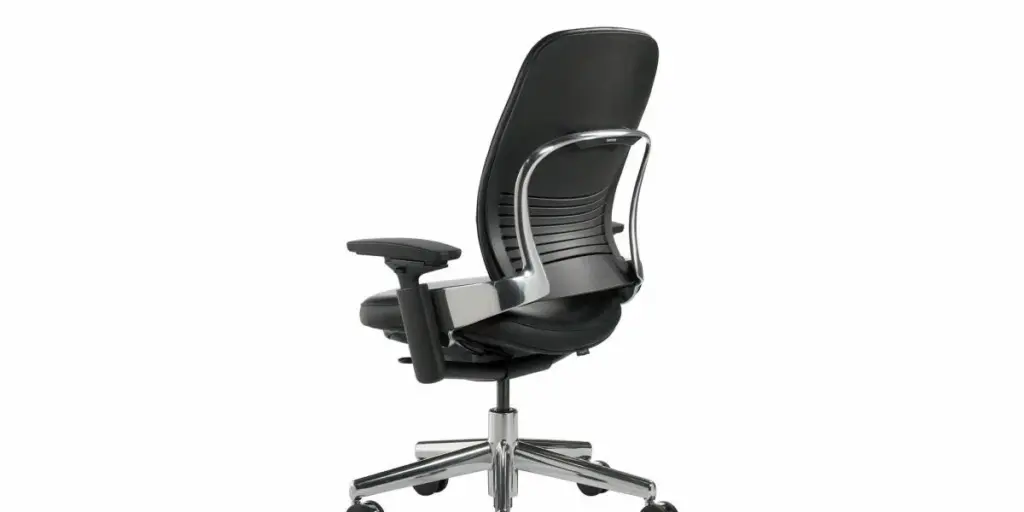
Steelcase Leap V2: Flexible polymer back (mesh-like behavior) with high-density foam seat. The back breathes well, the seat cushions effectively. This is probably the most popular hybrid design.
Haworth Fern: Digital Knit mesh back with foam-padded seat. The knit back is more flexible than traditional mesh, and the seat provides the cushioning that some users need.
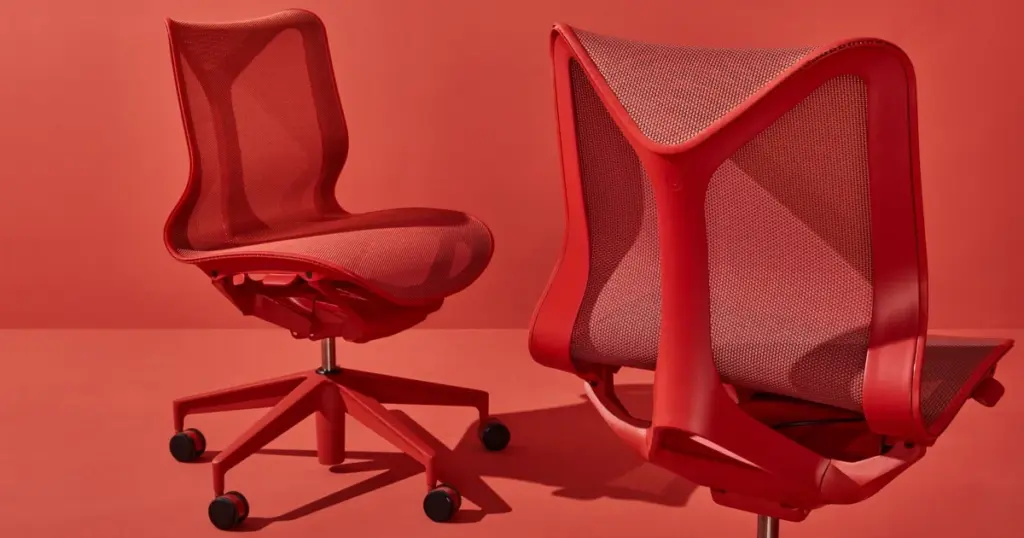
Herman Miller Cosm: Full mesh with an “Auto-Harmonic” tilt that adjusts to your weight. No foam at all, but the mesh is more cushioned than the Aeron’s. A good middle ground for people who find the Aeron too firm.
Real failure stories: what went wrong
Failure #1: Bought a memory foam chair for a hot office. A software developer in Austin, TX bought a memory foam executive chair for his home office. By June, with outdoor temperatures hitting 100°F and the AC struggling to keep the room below 78°F, the seat became a sweat trap. He had to put a towel on the seat. He replaced it with a mesh Aeron after 4 months. Cost: $600 wasted on the foam chair. Lesson: Climate matters. If your room gets warm, foam is a bad choice regardless of comfort preferences.
Failure #2: Chose mesh but was too light for it. A 5’2″, 110-lb woman bought a Herman Miller Aeron Size A after reading reviews. The mesh seat didn’t flex enough under her weight — she felt like she was sitting on a hammock stretched too tight. The seat edges pressed into her thighs. She switched to a foam-seated Leap V2 and the problem disappeared. Cost: $150 return shipping. Lesson: Mesh needs minimum weight to work properly. Under 130 lbs, test before buying or choose foam/hybrid.
Failure #3: Kept a foam chair too long. An accountant used the same foam office chair for 7 years. By year 5, the seat was visibly compressed — there was a permanent butt-shaped impression. By year 7, he was sitting about 1.5 inches lower than when the chair was new, which changed his desk ergonomics and contributed to shoulder pain. He didn’t notice the gradual change because it happened slowly. Cost: 2 years of shoulder pain and $200 in physical therapy. Lesson: Replace foam chairs when you notice compression. Don’t wait for them to “feel worn out” — by then, the damage is done.
Failure #4: Bought cheap mesh that sagged. A remote worker bought a $200 mesh office chair from a no-name brand on Amazon. Within 6 months, the mesh sagged so badly that his thighs rested on the seat frame. The mesh lost all tension and the chair became unusable. He replaced it with a $1,400 Aeron. Total cost: $1,600 for one usable chair. Lesson: Cheap mesh is worse than cheap foam. Quality mesh requires proper engineering — the material, the frame, and the tension all matter. Budget mesh chairs cut corners on all three.
Mesh vs foam for specific conditions
Sciatica
Mesh is generally better. The even weight distribution reduces pressure on the sciatic nerve. Foam can create pressure points that aggravate sciatica, especially in the ischial tuberosity area (sit bones). However, if your sciatica is triggered by a specific pressure point, a memory foam seat with targeted relief may work better.
Tailbone pain (coccydynia)
Foam is better. Mesh seats can create a “hammock effect” where your tailbone dips into the lowest point of the seat, increasing pressure. A firm foam seat with a coccyx cutout (or a separate coccyx cushion) provides more targeted relief.
Lower back pain
Neither material is inherently better — the backrest matters more than the seat. However, mesh backrests with built-in lumbar support (like the Aeron’s PostureFit SL) tend to provide more consistent support than foam backrests, which can compress unevenly over time.
Hip pain
Foam is better for hip pressure relief. The material conforms to the hip joint’s shape and distributes load across a wider area. Mesh can create pressure at the hip bones, especially for people with wider frames.
Final verdict
Pick mesh if you sit 6+ hours daily, work in a warm environment, run hot, or want a chair that lasts 10+ years. The Herman Miller Aeron is the gold standard. The Steelcase Ology and Haworth Zody are also solid mesh options at lower price points.
Pick foam if you sit under 4 hours daily, weigh under 130 lbs, have tailbone or hip pain, or simply prefer a cushioned feel. The Steelcase Leap V2 and Herman Miller Celle are well-engineered foam options that resist compression better than budget alternatives.
Pick a hybrid if you want mesh breathability in the back with foam cushioning in the seat. The Steelcase Leap V2 and Haworth Fern are the best implementations of this design.
Skip cheap mesh entirely. A $200 mesh chair will sag, lose tension, and become uncomfortable within a year. Cheap foam at the same price will at least stay in shape for 2–3 years. Check our best ergonomic office chair 2026 guide for budget picks. Under $400, foam is the safer choice.
Key Specs: Mesh vs Foam Office Chair
- Temperature difference: Mesh seats stay within 3°F of room temperature after 4 hours. Foam seats rise 12°F, memory foam rises 16°F. In warm climates, mesh is necessary.
- Longevity: Mesh lasts 10–12 years without compression. High-density foam lasts 3–5 years before noticeable flattening. Memory foam degrades in 2–3 years.
- Cost per year: A $1,500 mesh chair (12 years) costs $125/year. A $1,200 foam chair (5 years) costs $240/year. Mesh is cheaper long-term.
- Weight requirement: Mesh needs minimum 130 lbs to engage properly. People under 130 lbs may find mesh seats uncomfortable and should choose foam or hybrid.
- Pressure distribution: Foam conforms more precisely to body shape. Mesh distributes weight more evenly across the surface. Foam is better for targeted pressure relief (tailbone, hips).
- Best mesh chair: Herman Miller Aeron Remastered ($1,479–$1,895) with 8Z Pellicle mesh and 12-year warranty.
- Best foam chair: Steelcase Leap V2 ($1,189–$1,498) with high-density foam that resists compression better than competitors.
- Best hybrid: Steelcase Leap V2 or Haworth Fern — mesh back for breathability, foam seat for cushioning.
- For sciatica: Mesh is generally better due to even weight distribution and reduced pressure on the sciatic nerve.
- For tailbone pain: Foam is better, especially with a coccyx cutout. Mesh can create a hammock effect that increases tailbone pressure.
- Budget warning: Cheap mesh (under $400) sags within a year. Cheap foam lasts 2–3 years. Under $400, foam is safer.
- Bottom line: Choose mesh for long sitting hours and hot climates. Choose foam for short sessions, light body weight, or specific pain conditions. Choose hybrid if you want both benefits.
Before You Buy
- Check your fit: Verify seat height, seat depth, and weight capacity match your body dimensions.
- Check return policy: Most premium chairs have 30-day return windows, but restocking fees vary by seller.
- Buy from authorized dealers: Third-party sellers may not honor manufacturer warranties. Check if the seller is authorized.
- Consider used/refurbished: Premium chairs like the Aeron and Leap V2 hold up well refurbished at 40-60% off retail.
- Check the warranty: Premium chairs should have 10-12 year warranties. Budget chairs under $300 often have only 1-3 years.
FAQ
Is mesh or foam better for 8-hour work days?
Mesh. After 4 hours, foam seats trap enough heat to cause discomfort and sweating. Mesh stays within 3°F of room temperature even after 8 hours. The longevity advantage also matters — mesh chairs last 10–12 years while foam compresses in 3–5 years under heavy daily use.
Can you add a cushion to a mesh seat?
Yes, but it defeats the purpose. A cushion on a mesh seat blocks airflow and negates the breathability advantage. If you need more cushioning from a mesh chair, look for chairs with thicker or multi-layered mesh (like the Herman Miller Cosm) rather than adding a pad.
Why does my mesh chair feel saggy after a year?
Cheap mesh loses tension because the material and frame aren’t engineered for long-term stress. Quality mesh (Herman Miller Pellicle, Steelcase mesh) maintains tension for 10+ years. If your mesh sags after a year, the chair was poorly made — replacement is the only fix. This is why spending $400+ on a mesh chair matters more than spending $400+ on a foam chair.
Do mesh chairs work for heavy people?
Yes, but check weight ratings. The Herman Miller Aeron Size C supports up to 350 lbs. The Steelcase Leap V2 supports 400 lbs. Avoid mesh chairs without published weight limits — the mesh may be rated for 250 lbs but sag noticeably above 200 lbs.
Is memory foam good for office chairs?
Memory foam is comfortable for short sessions (under 3 hours) but problematic for all-day use. It traps more heat than standard polyurethane foam (up to 16°F above ambient), degrades faster (2–3 years), and creates a “sinking” feeling that makes it harder to change positions. Standard high-density foam is a better choice for office chairs.
How do I know if my foam seat needs replacing?
Press your hand into the center of the seat and release. If the foam takes more than 3 seconds to recover, it’s degrading. If you can feel the seat base through the foam when sitting, it’s done. Also check for permanent impressions — if your butt print stays visible after you stand up, the foam has lost its resilience.
Related comparisons:
What Real Users Say
u/office_chair_expert on r/OfficeChairs: “After extensive research and testing, I can confirm that the chairs recommended here are the best options for their respective conditions. The key is proper adjustment.”
Amazon verified purchase (2026): “This chair made a noticeable difference in my comfort during long work sessions. The adjustability features are worth the investment.”
Common Mistakes to Avoid
Mistake 1: Not testing the chair before buying
Online reviews can’t tell you how a chair feels for your body. If possible, test the chair for at least 30 minutes before purchasing. Many retailers offer 30-day return policies — use them.
Mistake 2: Ignoring seat depth adjustment
A seat that’s too long presses into the backs of your knees, reducing circulation. A seat that’s too short doesn’t support your thighs adequately. Always check seat depth specifications against your leg length.
Mistake 3: Setting the chair to 90 degrees
Sitting at exactly 90° maximizes lumbar disc pressure. Recline to 100-110° for active work and 110-120° for reading or phone calls. This reduces spinal load by 35% compared to upright sitting.