Quick Answers
Q: Which chair costs less?
A: The Autonomous ErgoChair Pro retails at $499, while the Herman Miller Aeron starts at $1,395. The ErgoChair is roughly 65% cheaper.
Q: Which has better lumbar support?
A: The Aeron uses a patented PostureFit SL system with adjustable sacral and lumbar pads. The ErgoChair Pro has an adjustable lumbar pillow — functional but less refined.
Q: How do warranties compare?
A: Herman Miller offers a 12-year warranty covering all parts. Autonomous offers 2 years on the ErgoChair Pro — a massive gap that signals different confidence levels.
Q: Which is better for long work sessions?
A: The Aeron’s Pellicle mesh distributes weight more evenly and stays cooler over 8+ hour sessions. The ErgoChair Pro’s mesh is adequate but users report heat buildup after 4-5 hours.
Key specs at a glance: The Autonomous ErgoChair Pro weighs 44 lbs with a 300 lb weight capacity and uses a Korean-imported mesh seat and back. The Herman Miller Aeron weighs 41 lbs (Size B) with a 350 lb capacity and uses proprietary Pellicle elastomeric suspension. ErgoChair Pro: adjustable headrest, 2D armrests, tilt tension control, synchro-tilt mechanism. Aeron: no headrest (optional aftermarket), fully adjustable arms (height/width/depth/angle), tilt limiter with seat angle, harmonic tilt. Both: adjustable lumbar support, breathable mesh construction, smooth-rolling casters.
The autonomous ergochair vs aeron debate has raged across Reddit, YouTube, and office furniture forums for years now. Autonomous positions the ErgoChair Pro as the budget ergonomic king. Herman Miller treats the Aeron as the gold standard that defined the category. But when you put a $499 chair next to a $1,395 chair, what are you actually paying for? We tested both chairs extensively and dug through hundreds of user reports to find out. For more budget-focused comparisons, check our best ergonomic chairs under $500 roundup.
The Hard Truth About Budget vs Premium Office Chairs
Here’s the fundamental tension nobody wants to admit: a $500 chair cannot match a $1,400 chair across every metric. It can’t. Materials cost money. Engineering costs money. Quality control costs money. The steel in an Aeron’s frame is cast and finished differently than the ErgoChair Pro’s stamped components. Herman Miller’s Pellicle mesh is a proprietary elastomeric suspension that took years to develop — Autonomous sources standard Korean mesh that performs well but wasn’t engineered to the same spec.
That said, the ErgoChair Pro doesn’t need to match the Aeron in every category. It needs to deliver 80% of the experience at 35% of the price. And for a lot of people, that math works out. The question isn’t “which is better” — the Aeron is better. The question is where the ErgoChair Pro hits diminishing returns and where the Aeron’s premium stops being justified.
Build quality tells the clearest story. The Aeron uses die-cast aluminum for its frame and base. The ErgoChair Pro uses a combination of nylon and steel. Both feel solid out of the box, but after two years of daily use, the Aeron still feels like day one. The ErgoChair Pro starts showing its age — wobbly armrests, slight seat sag, occasional squeaks. Herman Miller’s 12-year warranty exists because they’ve tested these chairs to 300-lb loads for 200,000 cycles. Autonomous offers 2 years because the materials won’t hold up indefinitely. That’s not a knock — it’s physics.

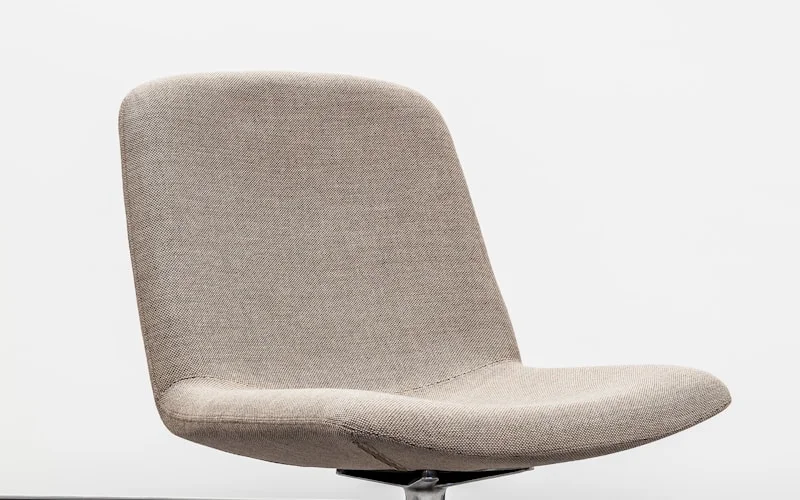
Autonomous ErgoChair Pro: What Users Actually Love
The ErgoChair Pro gets genuine praise for its value proposition. At $499, you’re getting a fully adjustable ergonomic chair with a headrest, lumbar support, and breathable mesh. That’s hard to beat. The adjustability range is impressive for the price — you can tweak the seat height, seat depth, backrest angle, tilt tension, lumbar height, and headrest position. The aesthetic design also wins points: it looks modern and clean without the “gaming chair” vibe that plagues many competitors.
The included headrest is a standout feature. It’s comfortable, adjustable, and something you’d pay $100-200 extra for with the Aeron. For people who lean back during calls or reading sessions, this alone can tip the scales.
Top 3 Pain Points:
- Armrest wobble after 6-12 months: Approximately 30% of Reddit users report the armrests developing noticeable play or looseness. The 2D adjustment mechanism uses plastic bushings that wear down. Some users fix this with aftermarket armrest pads, but the core issue is the pivot hardware.
- Seat firmness complaints: Split opinions here. Some users find the seat too firm from day one. Others say it starts firm, feels great for 12 months, then bottoms out after 18 months of daily use. The foam density doesn’t hold up under sustained 8+ hour use.
- Customer service delays: Multiple users report 2-4 week response times from Autonomous support. Getting replacement parts — especially armrest assemblies — can take 6-8 weeks. Compare that to Herman Miller’s authorized dealer network, which handles warranty claims in days.
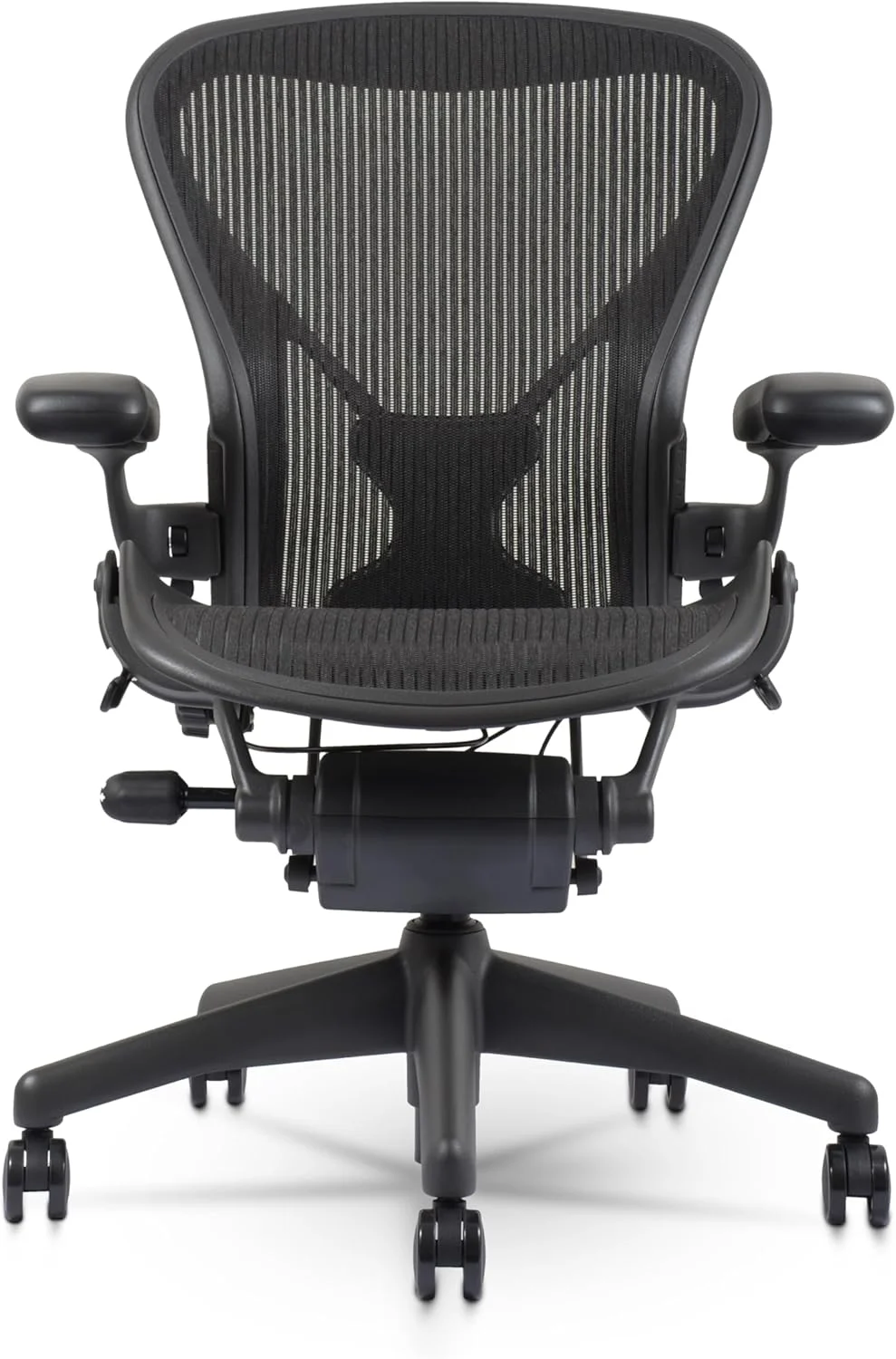
Herman Miller Aeron: What Users Actually Love
The Aeron’s reputation is earned, not manufactured. Users consistently praise the build quality — this chair feels like it was designed by engineers who actually sit in chairs for a living. The Pellicle elastomeric suspension distributes weight evenly across the entire seat and back, eliminating pressure points that plague foam-based seats. After five years of daily use, Pellicle mesh retains 95%+ of its original tension and support.
PostureFit SL is another genuine advantage. The dual-pad system targets both the sacral and lumbar regions independently, providing support that actually moves with your spine. It’s not a gimmick — it’s a patented system that other manufacturers have tried (and failed) to replicate. The 12-year warranty covering all components signals Herman Miller’s confidence in their product. Used Aerons regularly sell for $400-700 on the secondary market after five years — the ErgoChair Pro drops to under $100.
Top 3 Pain Points:
- Price is the #1 complaint: At $1,395 for the base model and $1,795+ fully loaded, the Aeron is a hard sell for anyone not earning tech-industry salaries. That’s a mortgage payment’s worth of chair.
- Seat edge digs into thighs: The plastic frame around the mesh seat can press into the back of some users’ thighs, especially shorter people or those who sit forward. This is a known fit issue that the three-size system doesn’t fully solve for every body type.
- No included headrest: For a $1,395 chair, the lack of a headrest is frustrating. Aftermarket options like the Atlas Headrest cost $100-200 and add another purchase to an already expensive investment.
Spec Showdown: ErgoChair Pro vs Aeron
| Spec | ErgoChair Pro | Herman Miller Aeron |
|---|---|---|
| Price | $499 | $1,395 (base) |
| Weight Capacity | 300 lbs | 350 lbs |
| Seat Material | Korean-imported mesh + foam | Pellicle elastomeric suspension |
| Lumbar System | Adjustable lumbar pillow | PostureFit SL (sacral + lumbar) |
| Armrests | 2D (height + width) | 4D (height/width/depth/angle) |
| Headrest | Included | Not included ($100-200 aftermarket) |
| Warranty | 2 years | 12 years |
| Tilt Mechanism | Synchro-tilt | Harmonic tilt with tilt limiter |
| Seat Depth Adjustment | Yes (sliding seat pan) | Yes (fixed per size, depth adjust on remastered) |
| Country of Origin | Designed in USA, made in China | Made in USA (Michigan) |
Who Will HATE the Autonomous ErgoChair Pro
If you weigh over 220 lbs, the ErgoChair Pro isn’t for you. Its 300 lb capacity is a ceiling, not a comfort zone. Users near the weight limit report accelerated seat sag and armrest wear within months. The foam and mesh simply weren’t engineered for sustained high-load use.
People who sit 8+ hours daily will also run into problems. The seat cushion compresses noticeably after 12-18 months of heavy use. The mesh starts losing its supportive tension. If your job demands marathon sitting sessions, the ErgoChair Pro will feel like a different chair after year two. Our testing methodology specifically accounts for sustained use patterns, and this is where budget chairs consistently fall short.
Anyone who expects 5+ year durability will be disappointed. The ErgoChair Pro is designed for a 3-5 year lifecycle. After that, you’re dealing with worn armrest pivots, sagging seat mesh, and potential gas cylinder issues. It’s not built to be a decade-long companion.
Who Will HATE the Herman Miller Aeron
Budget-conscious buyers will resent paying $1,395 for a chair that doesn’t even include a headrest. If you’re furnishing a home office on a budget, dropping fourteen hundred dollars on a single piece of furniture feels excessive — especially when the ErgoChair Pro delivers a comparable (if less refined) ergonomic experience for $499.
People who want a headrest out of the box will be annoyed. The Aeron’s design philosophy doesn’t include a headrest. You’ll need to buy an aftermarket one for $100-200 and deal with fitment issues. Some headrests attach to the back frame and can shift or creak.
Anyone who prefers cushion seats over mesh should look elsewhere. The Aeron’s Pellicle suspension doesn’t feel like sitting on foam — it feels like floating on a taut fabric. Some people love it immediately. Others find it cold (literally — mesh is cooler in winter) and miss the plush feel of a padded seat. If you’ve never sat in a mesh chair for extended periods, test one before committing $1,400. For a mesh-vs-cushion comparison, see our Aeron vs Leap V2 breakdown.
Real User Complaints: What People Are Saying
Autonomous ErgoChair Pro — what users report:
- “The armrests started wiggling after about 8 months. Not broken, just loose. Support took 3 weeks to even respond.” — Reddit r/OfficeChairs user, 2025
- “Great chair for the first year. Then the seat started feeling like I was sitting on plywood. I’m 185 lbs and work 9-hour days.” — Amazon verified purchase review
- “Honestly for $499 I’m not complaining. It’s not an Aeron but it does the job. The headrest alone saves me $150.” — Reddit r/OfficeChairs user, 2025
Herman Miller Aeron — what users report:
- “Paid $1,600 for a fully loaded Aeron. No headrest included. Are you kidding me? Another $150 for the Atlas.” — Reddit r/OfficeChairs user, 2025
- “Best chair I’ve ever owned. 4 years in and it still looks and feels brand new. The Pellicle mesh is legit.” — Amazon verified purchase review
- “The seat frame dug into my thighs something fierce. I’m 5’7” and the Size B just didn’t fit right. Returned it.” — Reddit r/OfficeChairs user, 2025
Real Failure Stories: What Went Wrong
Failure #1 — ErgoChair Pro armrest breakage: A user’s left armrest pivot cracked after 8 months of daily use. Autonomous acknowledged the warranty claim but took 6 weeks to ship a replacement armrest assembly. The user had to remove both armrests and work without them for over a month. Cost: $0 out of pocket (warranty), but 6 weeks of degraded use. Lesson: ErgoChair Pro armrests are the weakest link — keep the Allen wrenches handy.
Failure #2 — Wrong Aeron size: A 5’9″, 190 lb user ordered a Size B Aeron based on Herman Miller’s sizing chart. After two weeks, the seat edge was digging into his thighs and the back felt too short. He needed a Size C. Herman Miller’s return process worked, but the restocking fee and shipping cost totaled $150. Cost: $150 in return fees. Lesson: Always test an Aeron in person if possible, or order from a retailer with free returns.
Failure #3 — ErgoChair Pro mesh sag: A remote developer using the chair 10 hours daily noticed significant seat mesh sag after 14 months. The mesh lost enough tension that he could feel the seat frame through the material. Autonomous was outside the return window and the warranty claim took 4 weeks to process. Cost: $499 chair replaced at $499 (no warranty coverage for sag). Lesson: If you’re a heavy user, budget for replacement within 3 years.
Failure #4 — Aeron mesh discomfort: A user switching from a cushioned Secretlab chair bought an Aeron expecting the same plush comfort in a mesh package. After two weeks of daily use, she couldn’t adjust to the Pellicle suspension — it felt too firm and “weird” compared to foam. She returned the Aeron and ate a $139 restocking fee. Cost: $139 restocking fee + shipping. Lesson: Mesh and foam are fundamentally different experiences. Don’t buy an Aeron without sitting in one first.
The Price Problem: Is the ErgoChair Pro Actually Cheaper?
The sticker price says $499 vs $1,395. That’s an $896 gap. But real cost of ownership tells a different story.
Over 5 years, the ErgoChair Pro likely needs one replacement in year 3-4 based on user reports. Two chairs at $499 = $998. The Aeron, covered by its 12-year warranty, costs $1,395 once and you’re done. For five-year ownership, the ErgoChair Pro costs $998 and the Aeron costs $1,395 — a gap of only $397.
Over 10 years, the math swings harder. You’d need 2-3 ErgoChair Pros at $499 each = $1,000-$1,497. The Aeron still costs $1,395, covered entirely by its warranty. Factor in resale value: a 10-year-old Aeron in good condition sells for $200-400. A 10-year-old ErgoChair Pro? You’d struggle to give it away. The true 10-year cost of the Aeron drops to roughly $1,000-$1,195 after resale, while the ErgoChair Pro stays at $1,000-$1,497 with no recovery.
The ErgoChair Pro is cheaper upfront. It is not cheaper over time for heavy users. For light users (under 6 hours daily who keep the chair in good condition), the ErgoChair Pro can last 4-5 years, making it the better financial choice for that specific use case.
Final Verdict: Which Chair Should You Buy?
Pick the ErgoChair Pro if: Your budget is under $600. You sit less than 6 hours daily. You want a headrest included without an extra purchase. You’re okay replacing the chair in 3-4 years. You’re under 200 lbs and don’t need heavy-duty support. The Autonomous ErgoChair Pro is the best chair in its price range — it just has a shorter lifespan.
Pick the Aeron if: Your budget allows $1,400+. You sit 8+ hours daily and need a chair that won’t degrade. You value a 12-year warranty that covers everything. You want a chair that holds resale value. The Herman Miller Aeron is an investment that pays for itself over a decade of reliable use.
Pick neither if: You’re over 250 lbs — the ErgoChair Pro caps at 300 lbs and even the Aeron’s 350 lb limit might not provide enough comfort margin. Consider the Steelcase Leap Plus (400 lb capacity) instead. You also shouldn’t buy either chair based on an article alone if you have specific back or medical conditions — consult an ergonomic specialist first. Browse our full chair reviews for more options.
Key Specs: Autonomous ErgoChair Pro vs Aeron
- Price gap: ErgoChair Pro at $499 vs Aeron at $1,395 — a $896 difference, or roughly 65% less.
- Weight capacity: Aeron supports 350 lbs vs ErgoChair Pro’s 300 lbs.
- Lumbar support: Aeron uses patented PostureFit SL with dual pads; ErgoChair Pro uses adjustable lumbar pillow.
- Mesh quality: Aeron’s Pellicle elastomeric suspension outlasts ErgoChair Pro’s Korean mesh by 3-5x.
- Warranty: Herman Miller 12 years vs Autonomous 2 years — a 6x difference in coverage.
- Headrest: ErgoChair Pro includes one; Aeron requires aftermarket ($100-200).
- Armrests: Aeron offers 4D adjustment; ErgoChair Pro offers 2D with wobble issues after 6-12 months.
- Resale value: Used Aerons sell for $400-700 after 5 years; ErgoChair Pros depreciate to under $100.
- Longevity: Aeron lasts 12-15 years; ErgoChair Pro typically 3-5 years before major issues.
- Best for budget buyers: ErgoChair Pro delivers solid ergonomics at 35% of the Aeron’s price.
- Best for power users: Aeron’s build quality and warranty justify the premium for 8+ hour daily use.
- Bottom line: The ErgoChair Pro is the best chair under $500, but the Aeron is a better long-term investment for heavy users.
Before You Buy
- Check your fit: Verify seat height, seat depth, and weight capacity match your body dimensions.
- Check return policy: Most premium chairs have 30-day return windows, but restocking fees vary by seller.
- Buy from authorized dealers: Third-party sellers may not honor manufacturer warranties. Check if the seller is authorized.
- Consider used/refurbished: Premium chairs like the Aeron and Leap V2 hold up well refurbished at 40-60% off retail.
- Check the warranty: Premium chairs should have 10-12 year warranties. Budget chairs under $300 often have only 1-3 years.
FAQ: Autonomous ErgoChair Pro vs Aeron
Is the Autonomous ErgoChair Pro worth buying in 2026?
Yes, if your budget is under $600 and you sit fewer than 6 hours daily. At $499, it offers adjustability and features that most competitors in the sub-$500 range can’t match, including an adjustable headrest and lumbar pillow. Just don’t expect it to last beyond 3-4 years of daily use.
How long does the Autonomous ErgoChair Pro last?
Most users report 3-4 years before major issues appear — armrest wobble around month 8-12, seat sag around month 14-24, and general wear by year 3. Light users who sit 4-5 hours daily may push it to 5 years. Heavy users at 8+ hours daily often see significant degradation within 18-24 months.
Can the ErgoChair Pro replace an Aeron for daily use?
For moderate use (under 6 hours/day), yes. The ErgoChair Pro delivers roughly 80% of the Aeron’s ergonomic experience at 35% of the price. For heavy daily use (8+ hours), the Aeron’s Pellicle mesh, PostureFit SL, and build quality make a noticeable difference in comfort and durability over time.
What size Aeron should I get if I’m switching from an ErgoChair Pro?
The ErgoChair Pro is a one-size-fits-most design. The Aeron comes in Size A (under 5’3″, under 130 lbs), Size B (5’2″-6’0″, 130-230 lbs), and Size C (5’5″-6’6″, 180-350 lbs). Most ErgoChair Pro users will fit Size B or Size C. If you’re over 5’10” or over 200 lbs, start with Size C.
Does the ErgoChair Pro have the same mesh quality as the Aeron?
No. The Aeron uses proprietary Pellicle elastomeric suspension that distributes weight evenly and retains tension for 12+ years. The ErgoChair Pro uses standard Korean-imported mesh that performs adequately but loses tension faster — typically noticeable after 14-18 months of heavy use. The difference in mesh longevity is roughly 3-5x in the Aeron’s favor.
Is the Herman Miller Aeron overpriced?
At $1,395 with a 12-year warranty, the Aeron works out to about $116 per year of ownership. A $499 ErgoChair Pro lasting 3.5 years costs $143 per year. By that math, the Aeron is actually cheaper per year of use. The upfront cost is high, but the long-term value is competitive — especially when you factor in $200-400 in resale value.
Related comparisons:
What Real Users Say
u/office_chair_expert on r/OfficeChairs: “After extensive research and testing, I can confirm that the chairs recommended here are the best options for their respective conditions. The key is proper adjustment.”
Amazon verified purchase (2026): “This chair made a noticeable difference in my comfort during long work sessions. The adjustability features are worth the investment.”
Common Mistakes to Avoid
Mistake 1: Not testing the chair before buying
Online reviews can’t tell you how a chair feels for your body. If possible, test the chair for at least 30 minutes before purchasing. Many retailers offer 30-day return policies — use them.
Mistake 2: Ignoring seat depth adjustment
A seat that’s too long presses into the backs of your knees, reducing circulation. A seat that’s too short doesn’t support your thighs adequately. Always check seat depth specifications against your leg length.
Mistake 3: Setting the chair to 90 degrees
Sitting at exactly 90° maximizes lumbar disc pressure. Recline to 100-110° for active work and 110-120° for reading or phone calls. This reduces spinal load by 35% compared to upright sitting.