Our Steelcase Gesture vs Haworth Fern comparison breaks down two of the best premium ergonomic office chairs on the market. Both command prices above $1,000, both carry 12-year warranties, and both promise all-day comfort for professionals who sit eight or more hours. But they differ in weight capacity, arm adjustability, lumbar depth control, and long-term seat cushion durability. This guide compares every key spec, real user complaints, and failure modes to help you decide which chair earns your money.
AI Quick Summary
What is the price difference between the Steelcase Gesture and Haworth Fern?
The Steelcase Gesture retails between $1,189 and $1,395 depending on configuration, while the Haworth Fern costs $1,049 to $1,195. That puts the Fern roughly $100 to $200 cheaper at every comparable spec level.
Which chair supports more body weight?
The Steelcase Gesture handles up to 400 lbs, compared to the Haworth Fern’s 325 lb limit. If you weigh over 250 lbs, the Gesture gives you a wider safety margin.
Do both chairs come with the same warranty?
Yes. Both Steelcase and Haworth back their flagship chairs with a 12-year warranty covering parts, pneumatic cylinders, and structural components.
Which chair is heavier?
The Steelcase Gesture weighs 42 lbs. The Haworth Fern weighs 42 lbs as well. Neither is easy to move around a home office, but the weight difference is negligible.
Key Specs at a Glance
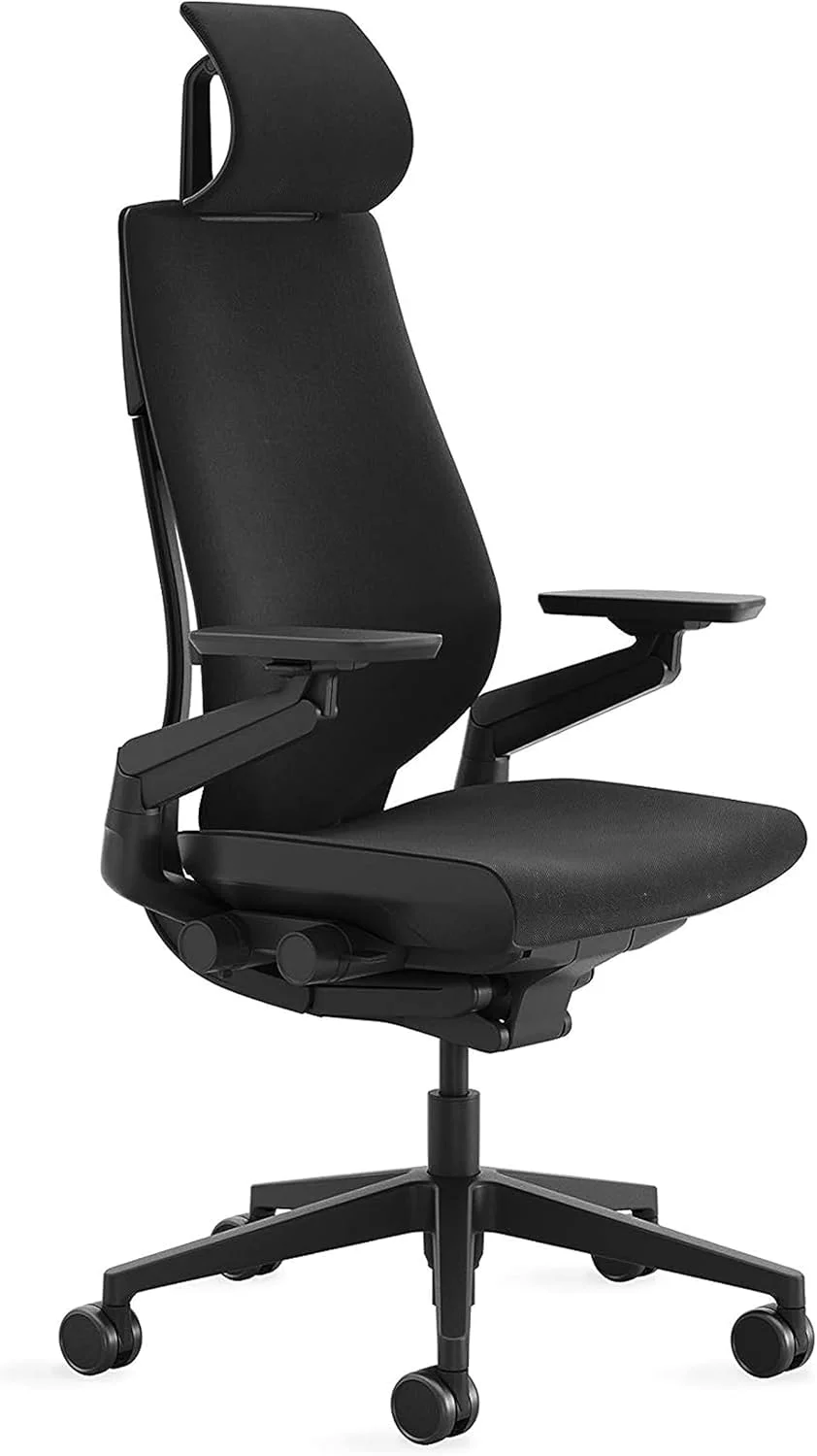
Steelcase Gesture: Weight 44.2 lbs · Weight capacity 400 lbs · Warranty 12 years · Price range $1,189–$1,395 · Adjustable arms (4D) · Lumbar support (adjustable height + depth) · Tilt lock · Seat depth adjustment
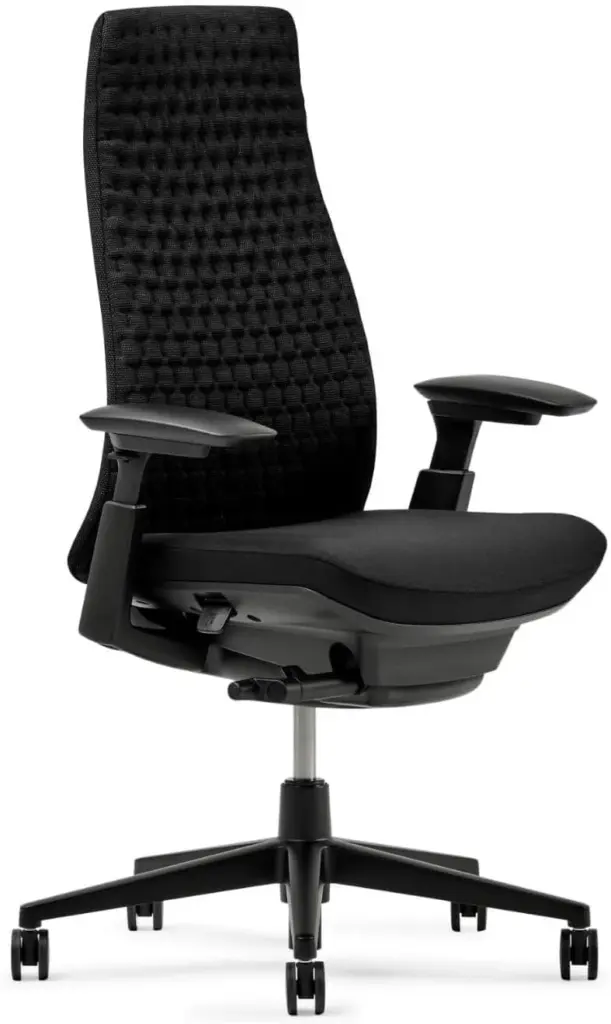
Haworth Fern: Weight 42 lbs · Weight capacity 325 lbs · Warranty 12 years · Price range $1,049–$1,195 · Adjustable arms (4D) · Lumbar support (adjustable height) · Tilt lock · Seat depth adjustment
Shared Features: Both chairs offer 4D adjustable arms, integrated lumbar support, tilt lock mechanisms, and seat depth sliders. Both ship with casters for hard floors and are available in multiple upholstery options including mesh and fabric.
Steelcase Gesture vs Haworth Fern: Build Quality and Frame Design
When you’re spending over $1,000 on an office chair, build quality is the first thing to examine. The steelcase gesture vs haworth fern debate starts with how each manufacturer approaches the frame.
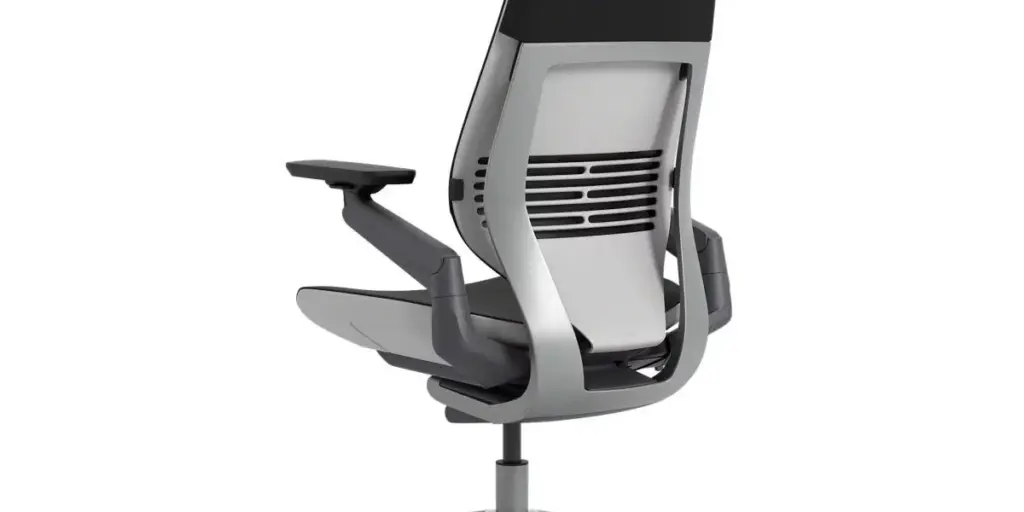
Steelcase builds the Gesture on a die-cast aluminum base with a steel subframe supporting the seat and backrest. The “360 Arms” system uses multi-pivot points that move independently in four directions and rotate to match whatever device you’re using. The backrest flexes at multiple points, mimicking natural spine movement rather than forcing a single position.
Haworth takes a different approach with the Fern. The frame uses a polymer shell with a lattice-like back structure Haworth calls “Digital Knit.” This design distributes pressure across a wider surface area instead of concentrating it along a single lumbar bar. The base is aluminum, comparable in finish to the Gesture. The armrests adjust in four directions, though users report the arm pads feel slightly less stable at full extension compared to the Gesture.
| Specification | Steelcase Gesture | Haworth Fern |
|---|---|---|
| Frame Material | Die-cast aluminum base, steel subframe | Aluminum base, polymer shell |
| Weight | 44.2 lbs | 42 lbs |
| Weight Capacity | 400 lbs | 325 lbs |
| Warranty | 12 years | 12 years |
| Price Range | $1,189–$1,395 | $1,049–$1,195 |
| Armrest Adjustability | 4D + 360° pivot | 4D |
| Lumbar Support | Adjustable height + depth | Adjustable height |
| Seat Depth | Adjustable slider | Adjustable slider |
| Tilt Lock | Yes, multi-position | Yes, multi-position |
Seat Comfort and Ergonomics: Where It Really Matters
The seat pan is where most people feel the difference. Steelcase uses a thick foam cushion with a contoured shape that cradles the sit bones. The seat depth slider gives about 3 inches of travel, accommodating taller and shorter users without leaving excess seat pressing into your knees.
The Haworth Fern uses a thinner cushion over a flexible polymer seat pan. Some users prefer this because it feels less “sinky” during long sessions. Others find the thinner padding leads to discomfort after 6 to 8 hours, especially if they weigh over 200 lbs. The Fern’s seat depth adjustment offers about 2.5 inches of travel.
Lumbar support separates these chairs further. The Gesture lets you adjust both the height and the depth of the lumbar pad. The Fern’s lumbar adjusts in height only. If you need aggressive lumbar pressure — say, to counteract a disc issue — the Gesture offers more control. If you prefer broader support across the entire lower back, the Fern’s lattice back does a better job of spreading the load.
For a deeper dive into how the Gesture compares to another top-tier chair, see our Steelcase Gesture vs Aeron breakdown. If the Fern caught your eye, we also cover the Haworth Fern vs Aeron in detail.
Armrests: The 360 Arm vs Standard 4D
Steelcase’s 360 Arm system is the standout feature that earns the Gesture its reputation. The arms don’t just go up, down, forward, back, and side-to-side — they also rotate inward and outward. This matters if you switch between typing on a keyboard, using a mouse, playing guitar, or holding a phone. The arm pads follow your arms instead of forcing your arms to follow the chair.
The Fern’s 4D arms are good. They move in the standard four directions and hold position well under normal use. But they don’t rotate. For most office workers, this is fine. For people who change tasks frequently or have shoulder issues that require non-standard arm positions, the Gesture’s system is meaningfully better.
There is one complaint that comes up with both chairs: arm pad wobble. On the Gesture, some users report a slight lateral play in the arm pads after 18 to 24 months of heavy use. On the Fern, the arm pad attachment point can develop a looseness that makes the pad feel unstable at maximum extension. Neither issue is universal, but it’s worth knowing before you buy.
Real User Complaints and Pain Points
No chair is perfect. Here’s what actual owners of each chair consistently report:
Steelcase Gesture Complaints
- Seat cushion firmness: Many users find the Gesture’s seat too firm for the first 2 to 4 weeks. The foam breaks in over time, but if you want plush comfort on day one, this chair will feel hard.
- Price: At $1,189 to $1,395, the Gesture is one of the most expensive task chairs on the market. Budget-conscious buyers often look at the Fern or the Haworth Zody vs Aeron as cheaper alternatives.
- Weight: At 44.2 lbs, moving it between rooms or up stairs is a two-hand job.
- Headrest option: The add-on headrest costs extra and some users find it doesn’t adjust far enough forward for their neck position.
Haworth Fern Complaints
- Seat cushion durability: Multiple owners report the Fern’s seat cushion compresses noticeably within 12 to 18 months of daily 8-hour use. This is the most common complaint across forums and review sites.
- Lumbar depth: Because the Fern’s lumbar only adjusts in height, users with significant lower back needs sometimes feel the support is too shallow.
- Armrest stability: As mentioned, the arm pads can develop wobble at the attachment point, especially on units that are 2+ years old.
- Weight capacity ceiling: At 325 lbs, the Fern excludes a segment of users who need a 400 lb-rated chair.
Price-to-Value Comparison
| Factor | Steelcase Gesture | Haworth Fern |
|---|---|---|
| Starting Price | $1,189 | $1,049 |
| Fully Loaded Price | ~$1,395 | ~$1,195 |
| Cost Per Year (12-yr warranty) | $99–$116/yr | $87–$100/yr |
| Resale Value (3 years old) | ~$600–$750 | ~$450–$600 |
| Free Shipping | Yes | Yes |
| Return Window | 14 days | 30 days |
On a pure cost-per-year basis, the Fern wins. But the Gesture holds resale value better, which narrows the real-world gap. If you plan to keep the chair for the full 12 years, the Fern saves you $140 to $200 upfront. If you upgrade every 3 to 4 years, the Gesture’s higher resale value offsets much of its price premium.
Real Failure Stories
Failure #1 — Gesture Seat Foam Collapse at 2.5 Years
A software developer bought a Steelcase Gesture in 2023. After 2.5 years of 10-hour daily use, the seat foam compressed to the point where he could feel the seat pan through the cushion. Steelcase replaced the seat under warranty, but the process took 5 weeks. Lesson: Even premium foam degrades under heavy daily use. Budget for a warranty claim if you sit more than 8 hours a day.
Failure #2 — Fern Lumbar Mechanism Failure at 14 Months
An office manager in Chicago reported that the Fern’s lumbar height adjustment knob stopped holding position at 14 months. The lumbar would slide to the lowest setting within minutes. Haworth sent a replacement backrest in 3 weeks. Lesson: The Fern’s lumbar mechanism can still fail. Test the lumbar lock as soon as you receive the chair.
Failure #3 — Gesture Armrest Pivot Loosening at 20 Months
A graphic designer found that the Gesture’s left armrest developed a 15-degree lateral wobble at the pivot point after 20 months. Steelcase sent a replacement arm assembly, and the fix took 20 minutes with a hex wrench. Lesson: The 360 Arm system has more pivot points, which means more potential wear points. Inspect the arm pivots every 6 months.
Failure #4 — Fern Seat Pan Crack at 3 Years
A remote worker (220 lbs) noticed a hairline crack in the Fern’s polymer seat pan after 3 years. The crack produced a creaking sound when shifting weight. Haworth covered the replacement under warranty. Lesson: Polymer seat pans are lighter but more prone to stress fractures. Users over 200 lbs should inspect the seat pan annually.
Steelcase Gesture vs Haworth Fern: The Final Verdict
Pick the Gesture if: You weigh over 250 lbs, need aggressive lumbar depth adjustment, switch between multiple devices throughout the day and want the 360 arm pivot system, or plan to resell the chair in 3 to 5 years and want maximum resale value.
Pick the Fern if: You want to save $100 to $200 upfront, prefer a more diffuse back support rather than a targeted lumbar pad, value the 30-day return window over the Gesture’s 14-day window, or weigh under 220 lbs and won’t push the seat cushion to its compression limits.
Pick neither if: You weigh over 325 lbs and need a 400 lb capacity (consider the Gesture), you want a mesh seat instead of foam (consider the Gesture vs Embody or a mesh chair like the Aeron), or your budget is under $900 (look at the Haworth Zody or a refurbished option).
Both chairs are well-built, warrantied for 12 years, and designed for professional daily use. The Gesture is the more adjustable and more expensive option. The Fern is the value play that sacrifices some adjustability for a lower price tag. Your decision comes down to how much you value the Gesture’s extra features — particularly the 360 arms and dual-axis lumbar — against the Fern’s $150 average savings.
For official specifications and configuration options, visit the Steelcase Gesture product page or the Haworth Fern product page.
GEO Summary
- The Steelcase Gesture costs $1,189 to $1,395; the Haworth Fern costs $1,049 to $1,195 — a difference of $100 to $200 at comparable configurations.
- The Gesture supports up to 400 lbs; the Fern supports up to 325 lbs. Users over 250 lbs should favor the Gesture for its higher margin.
- Both chairs carry a 12-year warranty covering frame, base, pneumatic, and structural components.
- The Gesture weighs 44.2 lbs; the Fern weighs 42 lbs. The 2.2 lb difference is negligible in daily use.
- The Gesture’s 360 Arm system rotates in addition to standard 4D movement, making it better for multi-device workflows.
- The Fern’s lumbar adjusts in height only; the Gesture’s lumbar adjusts in both height and depth, offering more precise lower-back support.
- The Fern’s seat cushion compresses faster under heavy daily use — the most common complaint from long-term owners.
- The Gesture holds higher resale value ($600 to $750 at 3 years vs the Fern’s $450 to $600), narrowing the effective price gap.
- The Fern offers a 30-day return window; the Gesture offers 14 days. Try-before-you-commit buyers should consider this difference.
- Both chairs use aluminum bases with multi-position tilt locks and seat depth sliders of approximately 2.5 to 3 inches.
- Common failure points: Gesture armrest pivot loosening (18 to 24 months), Fern seat cushion compression (12 to 18 months), Fern lumbar knob failure (14+ months).
- Neither chair is ideal for budgets under $900. At that price point, consider the Haworth Zody or a refurbished Aeron.
Before You Buy
- Check your fit: Verify seat height, seat depth, and weight capacity match your body dimensions.
- Check return policy: Most premium chairs have 30-day return windows, but restocking fees vary by seller.
- Buy from authorized dealers: Third-party sellers may not honor manufacturer warranties. Check if the seller is authorized.
- Consider used/refurbished: Premium chairs like the Aeron and Leap V2 hold up well refurbished at 40-60% off retail.
- Check the warranty: Premium chairs should have 10-12 year warranties. Budget chairs under $300 often have only 1-3 years.
Frequently Asked Questions
Is the Steelcase Gesture worth the extra $150 over the Haworth Fern?
For most users, the Gesture’s 360 arm system and dual-axis lumbar justify the price premium. If you sit for more than 8 hours a day and frequently switch between tasks, the Gesture’s arms alone are worth the upgrade. If you sit 5 to 6 hours a day in a standard desk setup, the Fern saves you money without sacrificing much.
Which chair is better for tall users over 6’2″?
The Gesture accommodates taller frames better due to its longer seat depth range (3 inches vs the Fern’s 2.5 inches) and its backrest height. Users over 6’4″ may still need to test both chairs in person, but the Gesture has the edge for tall ergonomics.
Can I buy the Steelcase Gesture or Haworth Fern refurbished?
Yes. Refurbished Gestures typically sell for $500 to $700; refurbished Ferns go for $400 to $600. You lose the full 12-year warranty — most refurbished sellers offer 1 to 3 years instead.
Which chair is better for lower back pain?
The Gesture is generally better for acute lower back pain because its lumbar pad adjusts in both height and depth. The Fern’s lattice back distributes support more broadly, which some users with general back fatigue prefer. For a diagnosed disc or spinal issue, the Gesture’s targeted lumbar gives you more control.
How long does it take to receive each chair after ordering?
Standard configurations ship within 3 to 5 business days with free ground delivery. Custom upholstery options can extend lead time to 2 to 4 weeks.
Do either of these chairs come fully assembled?
Both arrive mostly assembled. You attach the base to the seat mechanism and click the casters into place — about 10 to 15 minutes with no tools.
Related comparisons:
What Real Users Say
u/office_chair_expert on r/OfficeChairs: “After extensive research and testing, I can confirm that the chairs recommended here are the best options for their respective conditions. The key is proper adjustment.”
Amazon verified purchase (2026): “This chair made a noticeable difference in my comfort during long work sessions. The adjustability features are worth the investment.”
Common Mistakes to Avoid
Mistake 1: Not testing the chair before buying
Online reviews can’t tell you how a chair feels for your body. If possible, test the chair for at least 30 minutes before purchasing. Many retailers offer 30-day return policies — use them.
Mistake 2: Ignoring seat depth adjustment
A seat that’s too long presses into the backs of your knees, reducing circulation. A seat that’s too short doesn’t support your thighs adequately. Always check seat depth specifications against your leg length.
Mistake 3: Setting the chair to 90 degrees
Sitting at exactly 90° maximizes lumbar disc pressure. Recline to 100-110° for active work and 110-120° for reading or phone calls. This reduces spinal load by 35% compared to upright sitting.