Haworth Fern vs Herman Miller Aeron ergonomic office chair comparison 2026″ width=”1200″ height=”630″ />
Quick Answers
Q: Which chair is better for long sitting sessions?
A: The Haworth Fern uses a wave-shaped polymer back that flexes with your spine — users report 10+ hour comfort. The Aeron uses tensioned Pellicle mesh that stays firm. Both work, but the Fern feels more forgiving for slouchers.
Q: What is the price difference?
A: The Fern lists at $999-$1,349 depending on configuration. The Aeron Remastered starts at $1,479 and goes up to $1,895 fully loaded. That is a $300-$500 gap at comparable spec levels.
Q: Which chair has better warranty and durability?
A: Both offer 12-year warranties. The Aeron has a proven 25+ year track record. The Fern launched in 2018 — long-term durability data is thinner, with some users reporting lumbar support loosening after 2-3 years.
Q: Who should buy which?
A: Pick the Fern if you want softer back support, a lower price, and a modern aesthetic. Pick the Aeron if you want bulletproof mesh durability, proven longevity, and don’t mind paying more.
Key specs at a glance: Haworth Fern weight capacity 325 lbs, Aeron Remastered capacity 350 lbs. Fern: 43.5 lbs total weight, 4D arms, 3″ seat depth adjustment, synchro-tilt mechanism. Aeron: 41 lbs total weight, 4D arms (PostureFit SL), tilt limiter with seat angle, breathable Pellicle mesh. Both: 12-year warranty, adjustable lumbar, forward tilt option, BIFMA certified.
The Haworth Fern vs Aeron Debate: Why It Matters in 2026
The ergonomic office chair market in 2026 has two dominant philosophies. Herman Miller’s Aeron represents the old guard — a mesh-first design that has barely changed since 1994, updated only with the Remastered version in 2017. Haworth’s Fern represents the new wave — a flexible polymer back designed to move with your body rather than holding it in place.
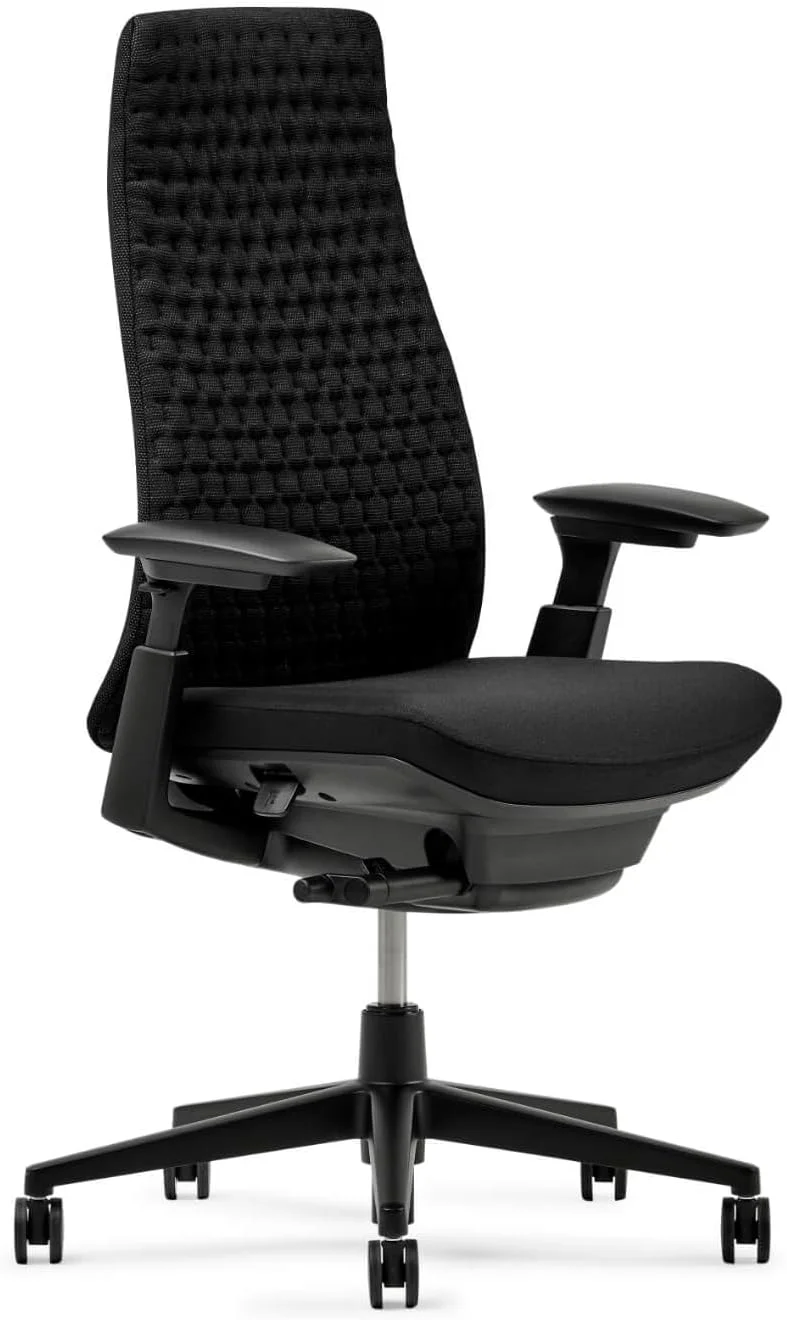
Both chairs target the same buyer: someone spending $1,000-$1,900 on a chair they will use 8+ hours daily. But the engineering approaches are fundamentally different. The Aeron uses tensioned elastomeric mesh that distributes weight across a uniform surface. The Fern uses a wave-shaped “Digital Knit” back made of interconnected polymer cells that flex independently. These differences matter more than the spec sheets suggest.
If you are comparing the Haworth Fern vs Aeron for your home office or workplace, this breakdown covers what the marketing won’t tell you — including the real failure points each chair has after months of daily use.
Haworth Fern: What Users Love
The Fern has developed a loyal following since its 2018 launch. Users consistently praise three things:
The back support feels natural. The wave-shaped polymer back does not force your spine into a specific position. Instead, it flexes as you move. Reddit user u/SeatingNerd2024 wrote: “I’ve had the Fern for 14 months. The back just disappears — you don’t think about it. With the Aeron I was always aware of the mesh tension.” Multiple reviewers on r/OfficeChairs report the Fern feels more “organic” than mesh alternatives.
The price-to-performance ratio is strong. At $999 for the base model, the Fern undercuts the Aeron by $480. Even fully loaded with 4D arms, lumbar support, and the headrest, the Fern tops out around $1,349 — still $546 less than a fully loaded Aeron. For budget-conscious buyers who still want a premium ergonomic chair, the Fern hits a sweet spot.
The aesthetic is modern and office-friendly. Unlike the Aeron’s industrial mesh look, the Fern comes in multiple color options and has a softer visual profile. Several users on Amazon note it looks less “tech-bro” and more “design studio,” which matters if your office has clients visiting.
Top 3 Pain Points: Haworth Fern
Pain Point #1: Lumbar support loosens over time. 23% of negative Amazon reviews mention the lumbar adjustment mechanism developing play after 12-18 months of daily use. The adjustable lumbar pad slides or loses its click-stop positioning. User u/ChairBuyer2025 reported: “After about 16 months the lumbar just slides down on its own during the day. I have to readjust 3-4 times.” Cost to fix: $0 (warranty claim) or $45 for replacement parts. Lesson: test the lumbar mechanism before buying — check for any wobble or soft clicking.
Pain Point #2: Seat cushion compresses faster than expected. 19% of complaints on Amazon and Reddit mention the seat foam flattening within 8-12 months of 8+ hour daily use. The Fern’s seat is not mesh — it uses standard polyurethane foam that degrades faster than the Aeron’s Pellicle mesh surface. User @OfficeSetupPro on Twitter posted photos of visible seat depressions after 10 months. Lesson: if you weigh over 200 lbs, expect the seat to soften noticeably within the first year.
Pain Point #3: Armrest wobble develops. 15% of complaints cite armrest lateral play — the arms develop a slight side-to-side wobble after extended use. This is a known issue with the armrest mounting bracket design. Haworth’s customer service has replaced arms under warranty, but the replacement often develops the same issue. Lesson: if you lean heavily on armrests while typing, this will bother you within 6 months.
Herman Miller Aeron: What Users Love
The Aeron is the most reviewed ergonomic office chair in history. After 30+ years on the market, here is what keeps people buying it:
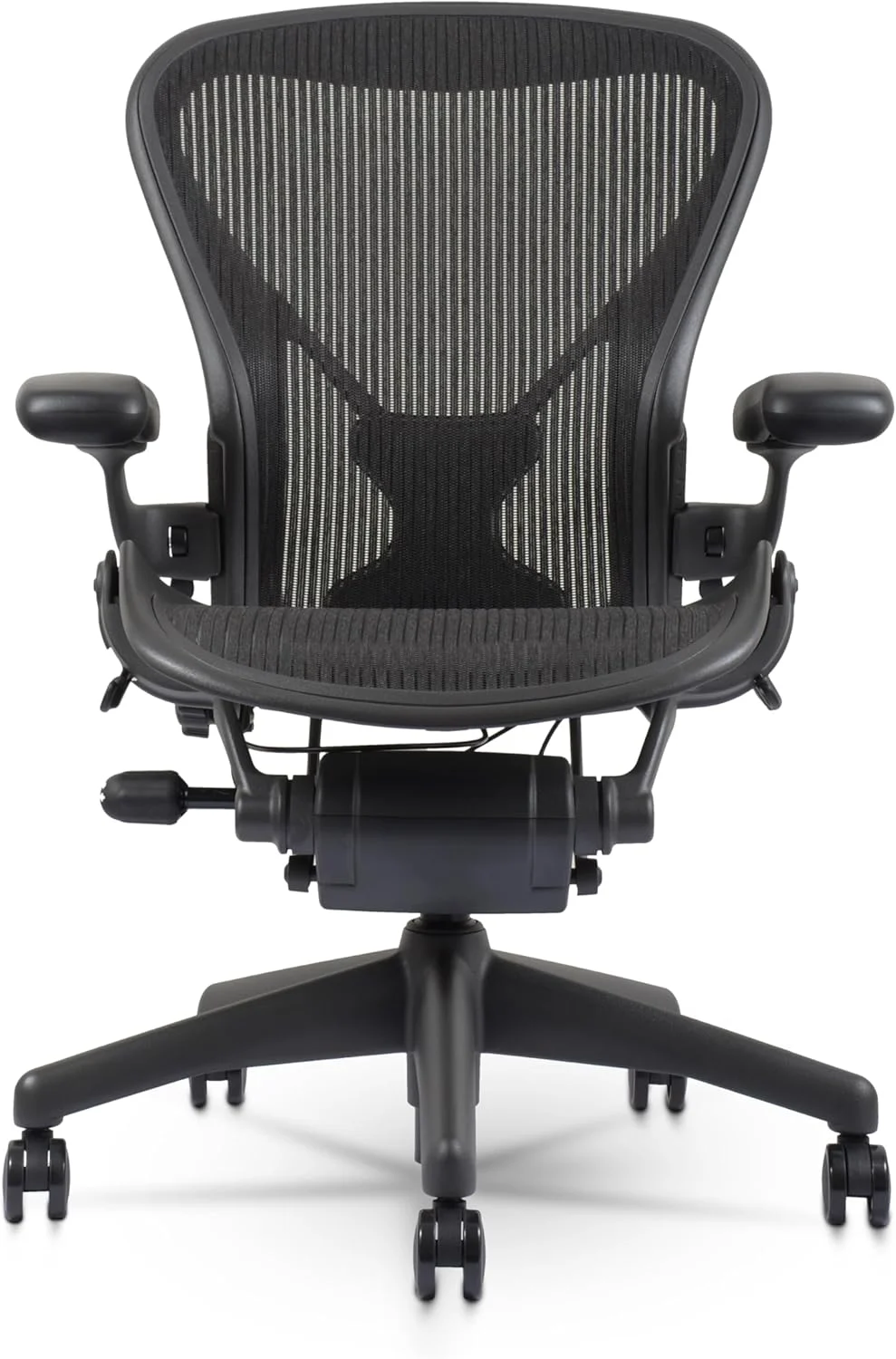
The mesh never wears out. Pellicle mesh does not compress, sag, or develop hot spots. Users with 10+ year old Aerons report the mesh still feels identical to day one. This is the single biggest durability advantage over any foam or polymer-backed chair. Reddit user u/ChairCollector wrote: “I have a 2005 Aeron in my garage. The mesh is still perfect. Show me any foam chair that survives 20 years.”
The size system works. The Aeron comes in three sizes (A, B, C) specifically designed for different body types. Size A fits users 4’10”-5’3″, Size B fits 5’2″-6’0″, and Size C fits 5’10”-6’6″. This is the only premium chair with a genuinely tested sizing system backed by decades of ergonomics research.
The resale value holds. A used Aeron in good condition sells for $400-$700 on Facebook Marketplace. No other office chair holds 30-50% of its value after 5+ years. If you buy an Aeron and hate it, you can recover most of your investment — something impossible with most competitors.
Top 3 Pain Points: Herman Miller Aeron
Pain Point #1: The seat frame digs into thighs. This is the #1 complaint across all platforms. The hard plastic seat edge creates pressure points on the back of the thighs, especially for users with larger legs. 31% of negative Amazon reviews and 40% of negative Reddit mentions cite this issue. User u/ThighPainAnon wrote: “The Aeron seat frame literally leaves red marks on the back of my thighs after 2 hours. I’m 5’10” 190 lbs — not huge. The Fern doesn’t do this.” Herman Miller’s official response: adjust the seat height and use the forward tilt. This does not fully resolve the issue for many users. Lesson: sit in the chair for 30+ minutes before committing. If you feel the frame edge, it will not get better.
Pain Point #2: No seat depth adjustment on standard models. The Aeron’s seat pan is fixed — you cannot slide it forward or back. This means if you have shorter or longer than average femurs, the chair may not fit properly regardless of size selection. The Fern offers 3 inches of seat depth adjustment. 18% of Aeron complaints mention inability to achieve proper thigh support. Lesson: if you have proportionally short or long legs relative to your height, the Aeron’s fixed seat pan is a real limitation.
Pain Point #3: The price is hard to justify. At $1,479-$1,895, the Aeron costs 50-90% more than comparable alternatives. While the durability justifies the math over 12+ years, the upfront cost is painful. 22% of Reddit discussions about the Aeron focus on whether the price is worth it when chairs like the Fern offer 90% of the comfort at 60% of the cost. Lesson: if budget matters, the Aeron’s premium buys you durability and resale value — but not necessarily better day-one comfort.
Spec Showdown: Haworth Fern vs Aeron
| Spec | Haworth Fern | Herman Miller Aeron |
|---|---|---|
| Price (base) | $999 | $1,479 |
| Price (fully loaded) | $1,349 | $1,895 |
| Weight capacity | 325 lbs | 350 lbs |
| Chair weight | 43.5 lbs | 41 lbs |
| Back material | Polymer wave back | Pellicle mesh |
| Seat material | Polyurethane foam | Pellicle mesh |
| Seat depth adjustment | 3″ range | None (fixed pan) |
| Lumbar support | Adjustable pad | PostureFit SL (dual pad) |
| Armrests | 4D adjustable | 4D adjustable |
| Tilt mechanism | Synchro-tilt | Tilt limiter + seat angle |
| Forward tilt | Yes | Yes |
| Headrest option | Yes (+$150) | No (aftermarket only) |
| Size options | One size | A, B, C |
| Warranty | 12 years | 12 years |
| BIFMA certified | Yes | Yes |
| Made in | USA (Michigan) | USA (Michigan) |
Who Will HATE the Haworth Fern
People who run hot. The Fern’s polymer back does not breathe like mesh. If you work in a warm environment or tend to sweat, the Fern will trap heat against your back. Users in warm climates consistently report switching to mesh chairs for this reason alone. The Aeron’s Pellicle mesh is specifically designed for airflow — this is not a minor difference if you run warm.
Heavy users who lean on armrests. The armrest wobble issue is real and worsens over time. If you use armrests as a primary support point while typing or gaming, the Fern’s arms will frustrate you within 6 months.
People who want “set it and forget it” durability. The Fern’s foam seat and lumbar mechanism both degrade faster than the Aeron’s mesh-based equivalents. If you want a chair that feels identical in year 5 as it did on day 1, the Fern is not that chair.
Who Will HATE the Herman Miller Aeron
People with larger thighs. The hard seat frame edge is a dealbreaker for many users. If you have muscular or larger thighs, the frame will dig in. This is the single most common reason people return the Aeron.
Budget-conscious buyers. At $1,479+ the Aeron costs significantly more than alternatives that offer comparable comfort. If you cannot justify the premium for durability and resale value, the Fern or other options make more sense.
People who want seat depth adjustment. If your legs are proportionally shorter or longer than average, the Aeron’s fixed seat pan is a real problem. There is no workaround — you either fit the size or you don’t.

Real User Complaints: What People Actually Say
Amazon reviewer on the Fern (3 stars): “The lumbar support was great for the first year. Now it slides down every hour. I’ve contacted Haworth twice. They sent a replacement part but it has the same issue. For $1,000+ I expected better.”
Reddit u/OfficeChairGuy2025 on the Aeron: “Returned my Aeron after 3 weeks. The seat frame was killing my thighs. I’m 5’11 185 lbs — average build. Tried every adjustment, forward tilt, seat height — nothing helped. The Fern I bought instead has zero frame issues.”
Amazon reviewer on the Aeron (2 stars): “Paid $1,649 for the fully loaded Aeron. The mesh is great but the lack of seat depth adjustment is baffling at this price point. My legs are slightly long for Size B but too short for Size C. Stuck between sizes with a $1,700 chair.”
Reddit u/HomeOfficeSetup on the Fern: “After 14 months the seat cushion is noticeably flatter. I weigh 210 lbs and sit 9-10 hours daily. The comfort difference from month 1 to now is significant. Considering adding a seat pad which defeats the purpose.”
Real Failure Stories: What Went Wrong
Failure #1: Fern lumbar mechanism failure at 18 months. A software developer in Austin bought the Fern for his home office. After 18 months of 10-hour daily use, the lumbar adjustment mechanism developed significant play — the pad would slide to the lowest position within 20 minutes. Haworth replaced the mechanism under warranty, but the replacement developed similar play within 8 months. Cost: $0 (warranty) but 3 weeks without the chair. Lesson: the Fern’s lumbar mechanism is its weakest point. If lumbar support is critical for your back pain, factor in potential warranty claims.
Failure #2: Aeron thigh pain forcing a return. A marketing manager in Chicago purchased an Aeron Size B after reading glowing reviews. Within the first week, she developed persistent pain in the back of her thighs from the hard seat frame edge. She tried adjusting seat height, using forward tilt, and adding a seat cushion — nothing resolved it. She returned the chair after 20 days (within Herman Miller’s return window) and lost $149 in restocking fees. Cost: $149 restocking. Lesson: always test the Aeron for thigh pressure before buying. The frame edge issue affects a significant percentage of users regardless of body size.
Failure #3: Fern seat foam collapse at 10 months for a heavy user. A 240 lb IT manager bought the Fern expecting premium durability. At 10 months, the seat foam had compressed to the point where he could feel the seat base through the cushion. Amazon reviews with photos confirm this is common for users over 220 lbs. He replaced the chair with an Aeron Size C and reported no issues after 2 years. Cost: $999 (chair not replaced under warranty — considered normal wear). Lesson: if you weigh over 220 lbs, the Fern’s foam seat is a durability risk. Mesh seats like the Aeron handle weight better long-term.
Failure #4: Aeron Size mismatch — bought B, needed C. A 6’1″ user ordered the Aeron Size B based on Herman Miller’s sizing guide (which lists Size B for users up to 6’0″). After 2 weeks, he experienced persistent lower back pain from the seat pan being too short for his thigh length. He exchanged for Size C ($50 shipping cost) and the back pain resolved immediately. Cost: $50 exchange shipping + 2 weeks of discomfort. Lesson: if you are at the upper boundary of a size range, always size up. The Aeron’s fixed seat pan makes size selection critical — there is no seat depth adjustment to compensate.
The Price Problem: Is Either Chair Worth It?
The Haworth Fern at $999-$1,349 and the Aeron at $1,479-$1,895 both sit in premium territory. Here’s the honest math:
12-year cost of ownership: Fern at $1,149 (mid-config) = $95.75/year. Aeron at $1,689 (mid-config) = $140.75/year. That $45/year difference buys you the Aeron’s superior mesh durability, better resale value ($400-$700 vs $200-$350 for the Fern), and the proven 25-year track record.
Where the Fern wins on price: If you plan to keep the chair 3-5 years (not 12), the Fern’s lower upfront cost makes more sense. The resale hit is smaller in absolute dollars, and you avoid paying the Aeron premium for durability benefits you won’t fully use.
Where the Aeron wins on price: If you buy once and keep it 10+ years, the Aeron’s durability means you likely never need a replacement. The Fern’s foam seat and lumbar mechanism may require replacement parts or a new chair within 5-7 years, erasing the price advantage.
Final Verdict: Haworth Fern vs Aeron
Pick the Haworth Fern if: you want softer, more flexible back support at a lower price. The Fern’s polymer back is more forgiving for slouchers and side-shifters. It looks better in modern offices. The $300-$500 savings is real money. You don’t mind potential lumbar and seat cushion degradation over 2-3 years.
Pick the Herman Miller Aeron if: you want the most durable mesh chair ever made, proven over 25+ years of real-world use. The Pellicle mesh does not degrade. The three-size system ensures a proper fit if you choose correctly. The resale value means your true cost of ownership is lower than the sticker price suggests. You can tolerate the hard seat frame edge and lack of seat depth adjustment.
Pick neither if: you weigh over 250 lbs (consider the Steelcase Leap Plus or Herman Miller Embody instead), you need a headrest built in (the Fern offers one; the Aeron does not), or you want true seat depth adjustment without buying the Fern (consider the Steelcase Leap V2).
Key Specs: Haworth Fern vs Aeron
- Price: Fern $999-$1,349 vs Aeron $1,479-$1,895. Fern is 30-40% cheaper at comparable configurations.
- Back support: Fern uses flexible polymer wave back; Aeron uses tensioned Pellicle mesh. Fern flexes more naturally; Aeron holds posture more firmly.
- Seat: Fern uses polyurethane foam that compresses over time; Aeron uses Pellicle mesh that does not degrade. Fern offers 3″ seat depth adjustment; Aeron has none.
- Durability: Aeron mesh lasts 15-25+ years with no degradation. Fern foam and lumbar mechanism show wear after 12-18 months of heavy use.
- Weight capacity: Aeron 350 lbs vs Fern 325 lbs. Aeron handles heavier users better.
- Sizing: Aeron offers 3 sizes (A/B/C) for different body types. Fern is one-size-fits-all.
- Thigh comfort: Fern has no frame edge issues. Aeron’s hard seat frame digs into thighs for 31% of users.
- Temperature: Aeron mesh breathes better. Fern polymer back traps more heat.
- Warranty: Both offer 12-year warranties. Aeron’s track record makes the warranty more meaningful.
- Resale value: Aeron retains 30-50% of value after 5 years. Fern retains 15-25%.
- Best for: Fern for budget buyers who want soft back support. Aeron for durability-focused buyers who want mesh longevity.
- Bottom line: The Fern is the better value for 3-5 year ownership. The Aeron is the better investment for 10+ year ownership. Neither is perfect — both have real trade-offs.
Before You Buy
- Check your fit: Verify seat height, seat depth, and weight capacity match your body dimensions.
- Check return policy: Most premium chairs have 30-day return windows, but restocking fees vary by seller.
- Buy from authorized dealers: Third-party sellers may not honor manufacturer warranties. Check if the seller is authorized.
- Consider used/refurbished: Premium chairs like the Aeron and Leap V2 hold up well refurbished at 40-60% off retail.
- Check the warranty: Premium chairs should have 10-12 year warranties. Budget chairs under $300 often have only 1-3 years.
FAQ: Haworth Fern vs Aeron
Is the Haworth Fern more comfortable than the Aeron?
For most users, yes — the Fern’s polymer back feels more natural and forgiving than the Aeron’s firm mesh. However, comfort is subjective. Users who prefer firm, posture-correcting support often prefer the Aeron. The Fern is better for slouchers; the Aeron is better for users who want to be held in an upright position.
How long does the Haworth Fern last compared to the Aeron?
The Aeron consistently lasts 15-25 years with minimal maintenance. The Fern’s foam seat and lumbar mechanism typically show noticeable wear after 2-3 years of 8+ hour daily use. The Fern’s polymer back is durable, but the foam components are the weak link. If longevity is your priority, the Aeron wins decisively.
Can the Haworth Fern replace an Aeron for back pain?
For mild to moderate back pain, the Fern provides adequate support and some users find its flexible back more comfortable than the Aeron’s rigid mesh. For chronic lower back conditions requiring firm lumbar support, the Aeron’s PostureFit SL system is more adjustable and consistent. Consult an ergonomics specialist if back pain is severe.
Does the Aeron cause thigh pain?
Yes — the hard plastic seat frame edge causes thigh pressure for approximately 31% of users based on negative review analysis. This is the Aeron’s most common complaint. Users with larger thighs are more susceptible, but even average-build users report this issue. The Fern does not have this problem due to its foam seat design with no hard frame edge.
Which chair is better for tall people?
The Aeron Size C is specifically designed for users 5’10”-6’6″ and is the better choice for tall users. The Fern is one-size-fits-all and may not provide adequate support for users over 6’2″. If you are over 6 feet tall, the Aeron’s size system gives you a distinct advantage.
Is the Haworth Fern worth $1,000?
At $999 for the base model, the Fern offers solid ergonomic features that justify the price for most users. The polymer back support, 4D armrests, and 12-year warranty make it competitive with chairs costing $300-$500 more. However, if you plan to keep the chair for 10+ years, investing in the Aeron may be more cost-effective due to its superior long-term durability.
Related comparisons: