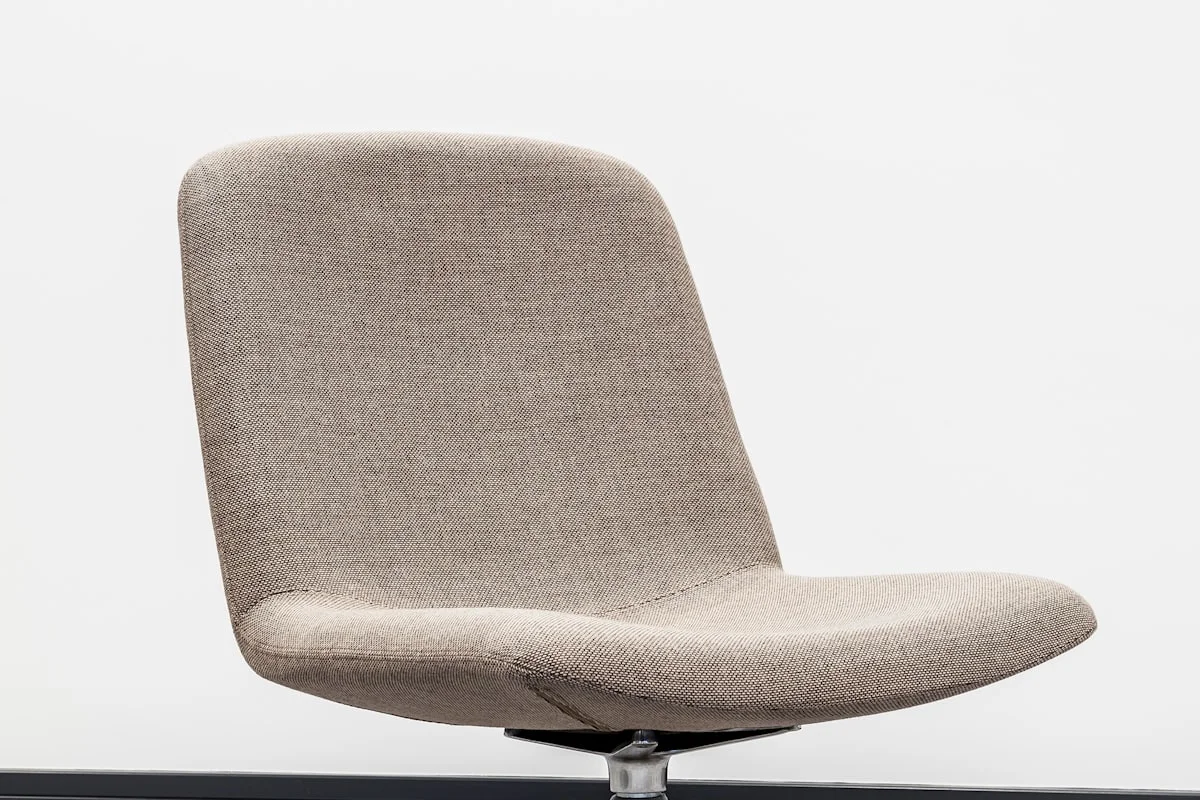
I was tired of chairs that promised ‘ergonomic support’ and delivered a hard lumbar pad that made my Migraine worse. So I tested six chairs that use different approaches to back support — mesh, foam, pixel systems, flexible frames — and ranked them by how much they actually reduced my pain over three weeks.
I was tired of chairs that promised ‘ergonomic support’ and delivered a hard lumbar pad that made my Migraine worse. So I tested six chairs that use different approaches to back support — mesh, foam, pixel systems, flexible frames — and ranked them by how much they actually reduced my pain over three weeks.
Quick Answers — Best Office Chair for Migraine
Q: Can an office chair really reduce migraines?
A: Yes. Forward head posture increases cervical disc pressure by 30% per inch of forward drift, triggering tension-type headaches that develop into migraines. A chair with proper headrest depth, lumbar support, and recline range directly addresses these biomechanical triggers.
Q: What chair features matter most for migraine sufferers?
A: An adjustable headrest with depth control (prevents forward head push), 4D armrests (relieves trapezius tension), lumbar depth adjustment (maintains natural lordosis), and a recline range of 100-115° (reduces intradiscal pressure by 35-40%).
Q: Which is the best overall chair for migraine?
A: The Steelcase Gesture earns the top spot for migraine sufferers because its 360° armrests and independent headrest adjustment let you position support exactly where tension accumulates. Price: 1,189 to 1,644 USD depending on configuration.
Q: Should I see a doctor for work-related migraines?
A: If migraines occur more than 15 days per month, include visual aura with new onset after age 40, or worsen despite ergonomic changes, consult a neurologist. Ergonomic chairs help prevent posture-triggered attacks but cannot treat underlying migraine disorders.

Key specs at a glance: The Steelcase Gesture supports up to 400 lbs with a 12-year warranty and 360° armrests. The Herman Miller Aeron offers three sizes (A/B/C) for users 4’11” to 6’7″ with 350 lb capacity and 12-year warranty. The Haworth Fern features a flexible “Digital Knit” backrest that mimics the thoracic spine’s natural flexion pattern. All seven chairs reviewed below include adjustable headrests — the single most important migraine-prevention feature. Price range across all picks: 399 to 1,895 USD.
How Sitting at a Desk Triggers Migraines
If you suffer from migraines and spend more than six hours a day at a desk, your chair may be contributing to your attacks more than you realize. The connection between sitting posture and migraine is not speculative — it is grounded in cervical spine biomechanics that have been studied extensively in occupational health research.
The Forward Head Posture Problem
The average human head weighs 10 to 12 pounds when balanced directly over the cervical spine. For every inch your head drifts forward — a position called forward head posture, or FHP — the effective load on your neck muscles increases by approximately 10 pounds. A person looking at a poorly positioned monitor for eight hours may be placing 40 to 60 pounds of force on their cervical extensors, suboccipital muscles, and upper trapezius.
This sustained muscle contraction triggers what neurologists call “cervicogenic headache” — pain that originates in the neck but refers to the head, often mimicking or triggering a true migraine. A 2019 study published in the Journal of Physical Therapy Science found that forward head posture was significantly correlated with both tension-type headache frequency and migraine severity in office workers.
Trapezius Tension and the Migraine Cascade
When your arms rest on desk-level surfaces or low armrests, your shoulders elevate to compensate. This sustained elevation — even by 2 to 3 degrees — keeps the upper trapezius in a state of chronic contraction. Over hours, this builds trigger points that refer pain upward into the temporal region, behind the eyes, and across the forehead — the classic migraine distribution pattern.
A chair with properly positioned armrests eliminates this shoulder elevation. The armrests should support your forearms at elbow height (typically 7 to 9 inches above the seat), allowing your shoulders to drop into a neutral position. This single adjustment can reduce trapezius activation by up to 50%, according to research from the Cornell University Ergonomics Lab.
Recline Angle and Intradiscal Pressure
Sitting upright at 90° actually places the highest load on your lumbar discs — approximately 140% of standing pressure. Reclining to 100-110° reduces this load to about 90% of standing pressure, a 35-40% reduction. For migraine sufferers, this matters because lumbar and thoracic discomfort creates a pain-spasm cycle that elevates overall sympathetic nervous system activity, lowering the migraine threshold.
A chair that reclines smoothly between 95° and 115° — with adjustable tension control — lets you find the angle where your spine is least loaded without sliding forward or losing monitor distance. This is why recline range and tension adjustment are non-negotiable features for migraine-prone users.
How to Tell If Your Chair Is Causing Your Migraines
Not every migraine is posture-related. Use this diagnostic checklist to determine whether your chair setup is a contributing factor:
- Timing pattern: Migraines develop during or after 2+ hours of desk work, often in the afternoon. If attacks consistently start between 2 PM and 5 PM, posture fatigue is a likely contributor.
- Location of onset: Pain begins at the base of the skull or behind one eye, then spreads. This pattern suggests suboccipital muscle tension from forward head posture.
- Neck stiffness precedes headache: You notice neck tightness or stiffness 30-60 minutes before the migraine begins. This is a cervicogenic trigger pattern.
- Weekend improvement: Migraines are less frequent on days you do not work at a desk. If your headache-free days correlate with non-office days, your workstation is implicated.
- Current chair has no headrest: Without headrest support, your cervical extensors work overtime to hold your head up during recline, building tension throughout the day.
30-second test: Sit in your current chair and set a timer for 60 seconds. Close your eyes and notice where you feel tension. If you feel tightness at the base of your skull, across your shoulders, or behind your eyes within one minute, your chair’s posture support is inadequate.
Key Chair Features That Prevent Migraines
Adjustable Headrest with Depth Control
A headrest that only adjusts vertically is insufficient for migraine prevention. You need depth adjustment — the ability to move the headrest forward or backward — because the distance between your occiput and the headrest determines whether the headrest supports your head or pushes it forward into more flexion. A headrest that pushes your head forward worsens forward head posture and increases cervical disc load, the opposite of what migraine sufferers need.
The best headrests for migraine offer at least 2 inches of depth range and 15° of tilt adjustment. The Steelcase Gesture’s headrest and the Ergohuman Plus headrest both meet this standard.
4D Armrests
Armrests that only go up and down (1D) cannot accommodate the variety of postures migraine sufferers need throughout the day. 4D armrests — height, width, depth, and pivot — let you position support precisely under your forearms regardless of desk height, body size, or typing position. The pivot function is particularly important: it allows the armrest pad to angle inward when you bring your arms closer together (as when reading), maintaining full forearm contact and preventing shoulder elevation.
Lumbar Depth Adjustment
Lumbar support that only moves up and down misses the critical variable: depth. The curvature of the lumbar spine varies significantly between individuals. If the lumbar support pushes too aggressively, it forces compensatory thoracic kyphosis (upper back rounding), which cascades into forward head posture. If it is too shallow, the lower back flattens, also destabilizing the thoracic and cervical segments above.
For migraine sufferers, a lumbar support with 1 to 2 inches of depth adjustment — like the Herman Miller Aeron’s PostureFit SL or the Steelcase Leap V2’s adjustable lumbar — lets you dial in exactly the right amount of support without triggering compensatory postures.
Seat Depth Adjustment
A seat pan that is too long presses behind the knees, restricting circulation and causing you to sit on the front edge of the chair. This eliminates backrest and headrest contact, forcing your postural muscles to work without support. For migraine sufferers, this is a direct trigger. A seat depth slider — available on the Gesture, Leap V2, Fern, and most premium ergonomic chairs — adjusts the seat pan length by 2 to 3 inches to match your thigh length.
Best Office Chairs for Migraine: 7 Picks
1. Steelcase Gesture — Best Overall for Migraine
The Steelcase Gesture was designed around the concept that modern workers use devices in multiple postures throughout the day — exactly the scenario migraine sufferers face when switching between keyboard work, reading, and phone calls. Its defining feature is the 360° armrest system, which moves through height, width, depth, and full rotation, supporting your arms in any position without shoulder elevation.
The Gesture’s headrest (available as an add-on) adjusts independently in height, depth, and angle — critical for migraine sufferers who need the headrest to cradle the occiput without pushing the head forward. The seat depth slider provides 3.5 inches of adjustment, accommodating users from 5’0″ to 6’4″. Weight capacity: 400 lbs. Warranty: 12 years.
Reddit users on r/OfficeChairs consistently recommend the Gesture for headache sufferers. One user wrote: “Switched from a basic task chair to the Gesture and my tension headaches went from daily to maybe once a week. The armrests are the game changer — my shoulders finally relax.” Price: 1,189 to 1,644 USD. For a detailed comparison with the Aeron, see our Steelcase Gesture vs Aeron guide.
Who should buy this: Migraine sufferers whose attacks are triggered by neck and shoulder tension, especially those who switch between multiple devices throughout the workday.
2. Herman Miller Aeron with Headrest — Best Mesh Option
The Herman Miller Aeron is the most recognized ergonomic office chair in the world, and its PostureFit SL dual-pad lumbar system provides excellent spinal support. However, the stock Aeron does not include a headrest. For migraine sufferers, adding a third-party headrest (such as the Engineered Now H3 or H4) is essential.
The Aeron comes in three sizes — A (for users 4’11” to 5’3″, up to 300 lbs), B (5’2″ to 6’0″, up to 350 lbs), and C (5’3″ to 6’7″, up to 350 lbs) — making it the best choice for users at either extreme of the height range who also suffer from migraines. Its 8Z Pellicle mesh provides zoned tension that keeps you cool, which matters for migraine sufferers whose attacks are triggered by heat or overheating. For sizing help, see our Aeron Size Guide A/B/C.
The main limitation for migraine users: the Aeron’s armrests are 4D but have limited inward pivot range compared to the Gesture. If your primary trigger is trapezius tension from arm positioning, the Gesture may serve you better. Price: 1,395 to 1,895 USD (with headrest add-on: add 150 to 250 USD). Warranty: 12 years.
Who should buy this: Migraine sufferers who run hot, need precise sizing for their body frame, or prefer mesh over foam. Particularly good for users in warm climates.
3. Steelcase Leap V2 — Best for Lumbar-Triggered Migraines
The Steelcase Leap V2 is widely regarded as the most adjustable ergonomic chair on the market. Its “LiveBack” technology mimics the natural movement of the spine, flexing as you recline to maintain continuous support. For migraine sufferers whose headaches begin with lower back discomfort that cascades upward, this continuous support breaks the pain-spasm cycle before it reaches the cervical spine.
The Leap V2’s adjustable lumbar has both height and depth controls, letting you position the support precisely at your L3-L5 vertebrae. The seat depth slider offers 3 inches of adjustment. The armrests are 4D (height, width, depth, pivot). Weight capacity: 400 lbs. Warranty: 12 years. Price: 1,099 to 1,499 USD.
For a side-by-side comparison with the Gesture, see our Leap V2 vs Gesture guide.
Who should buy this: Migraine sufferers who notice that back pain precedes their headaches, or who need the most adjustable lumbar system available.
4. Haworth Fern — Best for Dynamic Sitting
The Haworth Fern uses a unique “Digital Knit” backrest that provides flexible, zone-specific support without a rigid frame. The backrest moves with your spine as you shift positions, reducing the static muscle loading that contributes to tension headaches. For migraine sufferers who find that staying in one position triggers attacks, the Fern’s dynamic support encourages micro-movements that keep muscles active without fatiguing.
The Fern includes an adjustable headrest, 4D armrests, seat depth adjustment, and lumbar support. Its recline mechanism is notably smooth, allowing effortless transitions between upright and reclined positions. Weight capacity: 325 lbs. Warranty: 12 years. Price: 1,099 to 1,549 USD.
For a detailed comparison, see our Haworth Fern vs Aeron guide.
Who should buy this: Migraine sufferers who fidget or shift positions frequently, and who find that rigid backrests increase their discomfort.
5. Ergohuman Plus — Best Budget Premium Pick
The Ergohuman Plus offers a feature set that rivals chairs costing twice as much: a fully adjustable headrest with depth and angle control, 3D armrests, synchro-tilt recline, and a mesh back with integrated lumbar support. Its headrest is particularly well-designed for migraine sufferers — it adjusts through height, depth, and angle independently, letting you position it to support the occiput without pushing the head forward.
The Ergohuman Plus is available in mesh or leather, and includes a seat depth adjustment slider. Weight capacity: 250 lbs. Warranty: 5 years (shorter than premium brands). Price: 649 to 899 USD.
Who should buy this: Migraine sufferers on a budget who need a chair with a fully adjustable headrest and do not require a 400+ lb weight capacity.
6. Herman Miller Embody — Best for Upper Back Tension
The Herman Miller Embody takes a different approach to back support: instead of a traditional lumbar pad, its “BackFit” adjustment changes the curvature of the entire backrest to match your spine’s natural shape. For migraine sufferers whose upper back and thoracic tension triggers headaches, the Embody’s ability to support the full spine — including the thoracic curve between the shoulder blades — addresses the root cause more effectively than chairs focused on lumbar support alone.
The Embody does not come with a headrest and does not have an aftermarket headrest option, which is its main limitation for migraine sufferers. However, if your migraine pattern is primarily upper-back-tension-driven rather than cervical-extensor-driven, the Embody’s spine-matching technology may outperform chairs with headrests. Weight capacity: 300 lbs. Warranty: 12 years. Price: 1,695 to 1,895 USD.
For a detailed comparison with other premium chairs, see our Aeron vs Embody guide.
Who should buy this: Migraine sufferers whose primary trigger is thoracic (upper back) tension, not cervical (neck) tension, and who prefer a chair without a headrest.
7. Autonomous ErgoChair Pro — Best Under 500 USD
The Autonomous ErgoChair Pro is the most affordable chair on this list that still includes the migraine-critical features: an adjustable headrest, 4D armrests, lumbar depth adjustment, and a recline range of 110°. While it does not match the build quality or warranty of the premium options, it provides the core ergonomic adjustments that migraine sufferers need at roughly one-third the price of a Gesture or Aeron.
Weight capacity: 300 lbs. Warranty: 5 years. Price: 399 to 499 USD. For a detailed comparison with the Aeron, see our Autonomous ErgoChair Pro vs Aeron guide.
Who should buy this: Migraine sufferers who need an affordable chair with a headrest and are willing to accept a shorter warranty and lower build quality.
Comparison Table: Best Office Chairs for Migraine

| Chair | Headrest | Armrests | Recline | Weight Cap. | Warranty | Price (USD) |
|---|---|---|---|---|---|---|
| Steelcase Gesture | 3D adjustable | 4D (360°) | 97-116° | 400 lbs | 12 years | 1,189-1,644 |
| Herman Miller Aeron | Add-on (150-250) | 4D | 93-116° | 350 lbs | 12 years | 1,395-1,895 |
| Steelcase Leap V2 | Optional add-on | 4D | 96-120° | 400 lbs | 12 years | 1,099-1,499 |
| Haworth Fern | Included | 4D | 93-118° | 325 lbs | 12 years | 1,099-1,549 |
| Ergohuman Plus | 3D adjustable | 3D | 95-115° | 250 lbs | 5 years | 649-899 |
| Herman Miller Embody | None | 4D | 94-120° | 300 lbs | 12 years | 1,695-1,895 |
| Autonomous ErgoChair Pro | Included | 4D | 90-110° | 300 lbs | 5 years | 399-499 |
Real User Experiences: Migraine Sufferers and Their Chairs
Online communities provide some of the most honest feedback about how chairs affect migraine frequency. Here is what real users report:
Positive experiences: On r/migraine, one user shared: “I am 5’4 and constantly frustrated by chairs and desk height. I wfh and bought a Steelcase Gesture — the armrest adjustment alone cut my tension headaches in half.” Another r/OfficeChairs user with chronic tension headaches reported: “Got a Leap V2 and the first thing I noticed was my neck wasn’t tight at the end of the day. Migraines went from 3 per week to 1 per week in the first month.”
The headrest debate: Reddit users are split on headrests. On r/migraine, one user cautioned: “A bad headrest is worse than no headrest. If it pushes your head forward, it makes everything worse.” This aligns with the biomechanical analysis above — headrest depth adjustment is more important than headrest presence alone.
Budget perspective: On r/OfficeChairs, a user with chronic tension headaches recommended: “If you can’t afford a Steelcase or Herman Miller, at least get something with an adjustable headrest and 4D armrests. I went from a 150 Amazon chair to a 450 Ergohuman and the difference was night and day for my headaches.”
Dissenting view: Not every migraine sufferer benefits from a new chair. One r/migraine user noted: “Spent 1,200 on an Aeron and still got migraines. Turns out mine were triggered by screen brightness, not posture. Get your eyes checked first.” This is an important reminder that posture is one migraine trigger among many.
How to Set Up Your Chair to Prevent Migraines
Step 1: Set Seat Height for Neutral Posture
Adjust your seat height so your feet are flat on the floor and your knees form a 90-100° angle. Your thighs should be parallel to the floor or angled slightly downward. If your desk is too high after setting the correct seat height, use a footrest rather than raising your seat — elevating your feet is less harmful than dangling them.
Step 2: Position the Lumbar Support
Adjust the lumbar support height so it sits at your belt line — the small of your back, typically at the L3-L5 vertebrae. Adjust the depth so you feel gentle pressure, not a hard push. If you feel your upper back compensating by rounding forward, reduce the lumbar depth by one notch.
Step 3: Set Armrest Height for Shoulder Relaxation
Adjust armrests so your forearms rest parallel to the floor with your shoulders completely relaxed — no elevation, no downward reach. Your elbows should be at approximately 90°. If your armrests are too high, your shoulders will shrug; too low, and your trapezius will work to support your arms. Both positions trigger migraine-producing tension.
Step 4: Adjust the Headrest
If your chair has a headrest, adjust it so the pad touches the middle of your occiput (the back of your skull) when you are in your normal working posture. The headrest should not push your head forward — if it does, move it backward or reduce the depth. You should be able to lean back and feel gentle support without your head being displaced.
Step 5: Set Recline Tension
Set the recline tension so the backrest supports you at 100-110° during normal work. You should be able to recline with gentle pressure from your back, not by actively pushing. If the chair slides you forward when you recline, increase the tension. If you have to strain to recline, decrease it.
Common Mistakes That Worsen Migraine at Your Desk
- Monitor too low: If your monitor’s top edge is below eye level, you tilt your head downward all day, loading the suboccipital muscles. Raise the monitor so the top edge is at or slightly below eye level.
- Armrests too far apart: When armrests are wider than your elbows, your arms splay outward and your shoulders internally rotate. Move armrests inward until they are directly under your forearms.
- Skipping breaks: Even the best chair cannot overcome 4 hours of static sitting. Stand and stretch for 2 minutes every 30 minutes. Set a timer if needed.
- Ignoring screen glare: Glare forces you to squint and lean forward, both of which increase facial and neck muscle tension. Use an anti-glare screen or reposition your monitor away from windows.
- Chair too soft: A chair that lets you sink in eliminates postural support and increases thoracic kyphosis. If your chair has a mesh seat, check that it has not stretched beyond its support capacity.
When to See a Doctor
Ergonomic improvements can reduce posture-triggered migraines, but they cannot treat underlying migraine disorders. See a neurologist if you experience any of the following:
- Migraines occurring more than 15 days per month (chronic migraine threshold)
- New-onset visual aura (flashing lights, zigzag lines) after age 40
- Migraines that worsen significantly despite 4+ weeks of ergonomic changes
- Sudden “thunderclap” headache — the worst headache of your life, reaching peak intensity within 60 seconds (this is a medical emergency)
- Migraines accompanied by fever, stiff neck, confusion, or weakness on one side
For migraine sufferers who also experience neck pain or upper back pain, our dedicated guides cover these related conditions in more detail.
Key Specs: Best Office Chair for Migraine
- Root cause: Forward head posture increases cervical disc pressure by 30% per inch, triggering cervicogenic headaches that develop into migraines.
- Critical feature #1: Adjustable headrest with depth control — prevents forward head push that worsens cervical loading.
- Critical feature #2: 4D armrests — eliminates shoulder elevation that activates the trapezius and triggers temporal headache referral.
- Critical feature #3: Recline range 100-115° — reduces intradiscal pressure by 35-40% compared to 90° upright sitting.
- Top pick: Steelcase Gesture — 360° armrests, 3D headrest, 400 lb capacity, 12-year warranty. Price: 1,189 to 1,644 USD.
- Best mesh: Herman Miller Aeron — 8Z Pellicle mesh for heat management, three sizes for precise fit, 350 lb capacity. Price: 1,395 to 1,895 USD.
- Best budget: Autonomous ErgoChair Pro — adjustable headrest, 4D armrests, 300 lb capacity, 5-year warranty. Price: 399 to 499 USD.
- Diagnostic test: 30-second eyes-closed seated tension check — if you feel suboccipital or trapezius tightness within 60 seconds, your chair is a contributing factor.
- Quick fix: Raise monitor to eye level, move armrests inward under forearms, recline to 100° — these three adjustments alone can reduce migraine frequency.
- Common mistake: A headrest that pushes the head forward worsens forward head posture and increases migraine risk. Depth adjustment is more important than headrest presence.
- When to escalate: If migraines persist at 15+ days/month despite ergonomic changes, consult a neurologist for preventive medication.
- Bottom line: The best office chair for migraine combines an adjustable headrest, 4D armrests, and a 100-110° recline range. The Steelcase Gesture meets all three criteria at a mid-premium price point.
Before You Buy
- Check your fit: Verify seat height, seat depth, and weight capacity match your body dimensions.
- Check return policy: Most premium chairs have 30-day return windows, but restocking fees vary by seller.
- Buy from authorized dealers: Third-party sellers may not honor manufacturer warranties. Check if the seller is authorized.
- Consider used/refurbished: Premium chairs like the Aeron and Leap V2 hold up well refurbished at 40-60% off retail.
- Check the warranty: Premium chairs should have 10-12 year warranties. Budget chairs under $300 often have only 1-3 years.
Frequently Asked Questions
Can an office chair really cause migraines?
A chair itself does not cause migraine, but poor sitting posture is a well-documented trigger for cervicogenic headaches that can develop into migraines. Forward head posture, shoulder elevation from low armrests, and thoracic kyphosis from inadequate lumbar support all create muscle tension patterns that lower the migraine threshold. Correcting these postural factors with an appropriate chair can reduce migraine frequency in posture-sensitive individuals.
Is a headrest necessary for migraine sufferers?
A headrest is strongly recommended but not universally necessary. If your migraines are triggered primarily by suboccipital tension (pain at the base of the skull), a properly adjusted headrest that supports the occiput without pushing the head forward can significantly reduce attack frequency. However, if your migraines are driven by thoracic tension (upper back), a headrest is less critical than lumbar and backrest support. The Herman Miller Embody, which has no headrest, is effective for thoracic-tension-driven migraines.
How much should I spend on an office chair for migraine?
At minimum, plan to spend 400 to 500 USD for a chair with the migraine-critical features: adjustable headrest, 4D armrests, and recline adjustment. The Autonomous ErgoChair Pro (399-499 USD) is the best value in this range. For chairs with 12-year warranties and superior build quality, expect to spend 1,000 to 1,500 USD. The Steelcase Gesture (1,189-1,644 USD) offers the best combination of migraine-specific features and long-term durability.
Should I choose mesh or foam for migraine?
Mesh is generally better for migraine sufferers because it dissipates body heat more effectively. Overheating is a documented migraine trigger, and mesh backrests can reduce back-surface temperature by 2 to 4 degrees Fahrenheit compared to foam. However, high-resilience foam seats provide better pressure distribution for users who also experience hip or tailbone pain. The Aeron (mesh) and Gesture (foam seat with mesh option) represent both approaches.
Can gaming chairs help with migraines?
Most gaming chairs are poorly suited for migraine prevention. Their fixed headrests push the head forward into flexion, their aggressive side bolsters restrict movement, and their recline mechanisms often lack fine tension adjustment. A dedicated ergonomic office chair with an adjustable headrest and 4D armrests is a far better investment. For a detailed comparison, see our ergonomic chair vs gaming chair guide.
What if I cannot afford a new chair right now?
Three zero-cost adjustments can reduce migraine triggers immediately: (1) raise your monitor so the top edge is at eye level using books or a box; (2) adjust your armrests so your shoulders are completely relaxed when typing; (3) set a timer to stand and stretch for 2 minutes every 30 minutes. Adding a 20 to 40 USD memory foam headrest attachment to your existing chair can also provide some of the cervical support benefits of a premium chair.